
Home Visiting Works: Federal Study Proves It | KARA
A new federal study proves home visiting programs improve parenting, mental health, and family stability for years. Here’s the evidence and what Minnesota can do next.

A new federal study proves home visiting programs improve parenting, mental health, and family stability for years. Here’s the evidence and what Minnesota can do next.

Child Protective Services often measures reports, investigations, placements, reunifications, and case closures. But those numbers do not reveal whether children become safer, healthier, better educated, stably housed, or able to thrive as adults. KARA outlines the missing long-term outcomes lawmakers need to track and a privacy-protected framework for measuring whether public systems truly improve children’s lives.

Jonathan Swift’s 1729 satire, A Modest Proposal, used shocking imagery to expose the cruelty of public policies that treated poor Irish children as disposable. This post connects Swift’s warning to the realities faced by abused, neglected, homeless, incarcerated, and foster-care-involved children in America today. When society accepts policies that deny children safety, education, health care, stable housing, and meaningful support, it creates the very cycles of trauma, crime, poverty, and generational child abuse it claims to oppose. KARA shares this historic work as a call to replace indifference and punishment with prevention, protection, healing, and public accountability.
Back in the day, these writings were the modern equivalent of you tube or a precursor to Twitter and consumed voraciously by all who could read (or read them to others).
Public policy treated poor Irish more like animals than people and Irish children were doomed to lives of crime, prostitution, and abject poverty.
Was Swift’s underlying argument that death might be preferable to children doomed to disease, crime, prostitution, & the cruelties suffered by abandoned children of his time?

As a governor, you can move child protection from fragmented crisis response to coordinated, prevention centered, trauma informed systems that truly improve children’s lives. This article shows how executive vision, upstream budgets, transparent data, trauma informed and equity driven standards, foster care and juvenile justice reforms, and expanded mental health access can turn child safety and healing into core state priorities rather than side projects.

As an attorney general, you hold extraordinary power to shape whether abused and traumatized children are protected or abandoned to failing systems. This article shows how you can make child welfare and trauma a core priority, investigate systemic failures and enforce mandated reporting, litigate and regulate for transparency and reform, tackle disparities and overmedication, and lead policy, coordination, and public engagement. By using the full authority of your office, you can turn systemic child harm from a hidden crisis into a mandate for justice and healing.

As a state lawmaker, you have enormous power to shape whether vulnerable children experience systems as punitive and chaotic or protective and healing. This article lays out a roadmap for making child safety a statewide priority, mandating transparency and equity, investing in prevention and early intervention, embedding trauma informed standards across systems, reforming foster care and juvenile justice, and guaranteeing mental health care and strong aftercare. By grounding your statutes, budgets, and oversight in ACEs science and lived experience, you can turn the tide for children’s safety, healing, and long term well being.

As a mayor or county administrator, you cannot police your way to safe childhoods. When children grow up in toxic homes, criminalizing trauma driven behaviors only fuels future crime and broken families. This article offers a governing blueprint that shows how you can lead with a child centered civic vision, fund prevention and wraparound help, reform public safety and policy, and build trauma informed systems that truly protect children and strengthen your community.

You sit on the front line of child protection. Your choices about housing, policing, schools, public health, and mental health determine whether children are shielded from preventable trauma or left to face it alone. By investing in upstream prevention, trauma informed policies, accountable justice and housing systems, and strong community supports, you can transform your city or county from a crisis response machine into a true child protection engine.

There is no shortage of disturbing stories about violent children & authorities using violent means to control them. Today, the U.S. expels more children from daycare than any other industrialized nation and the levels of violence in our schools is frightening and harmful to all of us.
There is nothing more disturbing than watching a video of an armed 200 pound police officer twisting the arms of a 50 pound special needs child into a painful behind the back steel handcuffed position as the boy cries uncontrollably in his classroom, unless it is reading about the St. Louis Sheriff’s deputy tasering an 11 year old boy and threatening to sodomize him (Sheriff Mulch “nothing out of the ordinary…, followed protocol)
These stories and recent horrific police shootings of juveniles are a signal of overwhelmed institutions unable to deliver the most basic protection and safety services to the communities that employ them. Don’t blame service providers -it is lawmakers and administrators defending archaic policies that just don’t work anymore. Neither police nor teachers are able to nor should they be required (with the training we give them) to handle the deep and troubling behaviors of very disturbed children). Traumatizing five and six year old children because they have behavioral problems is just awful and it makes things so much worse for the child (and our society).
This story out of Texas, demonstrates how the police might better deal with troubled youth with an approach that recognizes the significance of mental health issues impacting police/child interaction. We need to do a 180 on dealing with mental health issues. Now.
The sooner we the people recognize that this is all about mental health and that schools and police departments are not mental health service providers, the safer our schools and city streets will become.
All adults are the protectors of all children.
America’s children are living through a historic experiment: what happens when a president dismantles the programs that feed them, teach them, heal them, and protect them. Under this administration, at risk children face more hunger, less health care, fewer early education opportunities, harsher immigration enforcement, and weaker child protection. This post explains what the future holds for America’s at risk children and what we must do now to change that.

Project 2025 and allied budget plans would slash or eliminate programs that children rely on for health care, nutrition, early childhood education, civil rights protections, and child welfare support. KARA summarizes CWLA and other advocates’ warnings, shows how child poverty and hunger are already rising, and urges you to share this information and call your lawmakers before more supports for kids disappear.
Most CPS reporting gives lawmakers only snapshots: how many kids are in care today, how many reports this year. KARA argues that counties must keep de identified, family level longitudinal records so legislators can see multi generational involvement, understand which interventions reduce repeat removals, and design policies that break cycles of trauma instead of just managing them case by case, year by year.

Minnesota’s new Supreme Court Council on Child Protection and Maltreatment Prevention is building a statewide blueprint to prevent child abuse and improve how the system works for families once they’re involved. Safe Passage helped launch this effort and is now tracking early reforms from Family Resource Centers to better training, legal representation, and foster youth supports and highlighting ways stakeholders can give input.

School principals and administrators are on the front lines of childhood trauma and healing. This chapter explains what they can do: create trauma informed school climates, implement early screening and embedded support services, reshape discipline away from zero tolerance, build robust mental health and wellness systems, engage families and community partners, and advocate for policies and funding that keep vulnerable students safe and help them heal.

Children in the U.S. are still being tried as adults and sentenced to die in prison. This post explains how juvenile life sentences work, the trauma and racial injustice they reflect, what adult prisons do to kids, and where real reform is finally beginning to take hold.

An investigative report from Pennsylvania’s TribLive found that nearly 30% of 845 child deaths and near-deaths from 2018–2022 were tied to parental drug use—often in families already known to Child Protective Services. Similar patterns are emerging in Minnesota, Allegheny County and other states. This KARA article shares real children’s stories, shows how CPS and child-fatality systems are failing to track the true scale of drug-related child deaths, and calls on adults everywhere to demand better data, oversight and protection.

Global value chains and multinational enterprises hold enormous power over labour practices in Bangladesh’s garment and leather industries. As responsibility for working conditions shifts from the state toward corporate social responsibility, under resourced labour inspectorates and export dependent strategies leave child labour embedded in business models.
This post uses Michael E. Nielsen’s 2005 analysis and CLARISSA’s research to show how precarious contracts, foreign loans, rising material costs and fragmented supply chains push informal enterprises to cut labour costs by relying on children. It argues that corporate acceptance of “that’s just the way things are done over there” hides the real drivers of child labour and that both nation states and corporations must change how they structure production if they are serious about ending exploitation.

The Alaska Children’s Alliance warns that Alaska has “some of the highest rates of child abuse and neglect in the nation,” noting research that 38% of children born in Alaska will be reported to child welfare before age 10 and nearly 1 in 7 will face an allegation of sexual abuse before age 12
A federal “bonfire of deregulation” and plans to erase “neglect” from child protection law are quietly dismantling Child Protective Services in America. Backed by the president and his base, these policies weaken legal protections, strip away thousands of pages of guidance, hide crucial government information, and slash funding—placing at‑risk children and families in even greater danger.
Foster care is meant to protect children whose lives are in danger, but for many youth, it leads to a painful transition into adulthood with little support and almost no transparency. Most critical data in Child Protective Services (CPS) is never tracked or reported, and decades of experience show that nearly 80% of youth aging out of foster care go on to lead dysfunctional lives, with enormous costs to public health, safety, and education.
This article, based on the work of Minnesota’s FOSTER ADVOCATES, explores the realities of foster care and the Extended Foster Care (EFC) program: the barriers youth face, the strengths of EFC, and the systemic gaps in housing, data, training, and life skills preparation. It concludes with 14 recommendations to improve data, accountability, and support so that foster youth are not punished for trauma, but given a real chance at stability and success.
Read, share, and then contact your legislators using the links provided to demand better outcomes for foster youth

Using KARA’s friend Ned’s “backwards car” analogy, this post explains how Child Protective Services is structured to protect its own bureaucracy rather than children. Conflicts of interest, secrecy, and missing metrics mean CPS often produces what it was designed to stop. The fix starts with transparency and informed legislators.

Child Protective Services exists to protect children, yet recent investigations show children being tortured, brutalized, and even murdered while known to CPS. Leadership that values efficiency over child safety is failing its mission. CASA’s “For the Child” model shows what child centered leadership should look like—and why urgent change is needed to stop preventable child deaths.

The Minnesota Promise Report is a foster led blueprint for changing how states treat children in CPS and foster care. It combines listening sessions, data, and bold ideas from Fosters themselves to define what it would mean for a state to truly keep its promise to children. Sharing this report with colleagues and state representatives is one way to support Foster Advocates—and to spark similar efforts across the country.

This article uses NCANDS data to identify the best and worst states for very young children in CPS, highlighting where infants and toddlers face the greatest risk of severe harm or death and how troubled, overwhelmed child protection systems are struggling with heavy caseloads and too few resources. It points lawmakers, advocates, and communities toward more transparent CPS reporting, stronger early childhood support, and data driven reforms that can actually protect kids and support families.

shining a light on child advocacy,

Foster care and group homes are supposed to protect our most troubled children, but for many they become another source of trauma. Youth in care face unstable placements, high rates of mental illness, overrepresentation in group homes, and far greater odds of homelessness, exploitation, and incarceration when they age out.
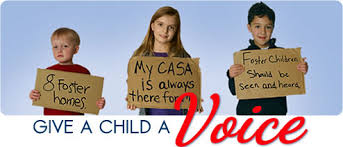
Minnesota’s Guardian ad Litem and CASA program has been under real strain—lost volunteers, rising caseloads, and stressed systems have put vulnerable children at risk. Alex Miller’s Minnesota CASA leadership as Chief Information Officer and Interim Program Administrator is helping move the program from crisis toward recovery. By modernizing technology, strengthening data security, and working transparently with the State Guardian ad Litem Board, he has helped stabilize turnover and rebuild trust. The result is a system that is slowly regaining its footing and putting more trained, supported advocates in the lives of abused and neglected children.

Market-based scholarship programs like Minnesota’s Early Learning Scholarships (MELS) prove these returns are scalable. MELS provides vouchers to low-income parents, empowering them to choose high-quality programs. Result: an 18% inflation-adjusted public ROI—higher than the S&P 500’s historical average111210. The keys to replicating this success are: Targeting at-risk children: Returns exceed $17 per dollar in high-poverty neighborhoods7. Parent empowerment:…
Compared to other government expenditures, early childhood programs are uniquely cost-effective. K–12 education spends ~$15,000/student annually with diminishing returns; prison systems cost $40,000/inmate yearly with high recidivism. Meanwhile, early childhood interventions like Head Start save $4.8B–$16.1B per

Official child welfare numbers may capture only part of the crisis. This analysis explains how poverty, Family Assessment practices, underreporting, misreporting, and weak transparency can hide the true scale of harm to children—and why future projections must account for what the system fails to record.
dive into the “ground truth” of the foster care system — exposing the often-unseen hardships children face even after being placed in protective care. Through heartbreaking stories like Alex’s and alarming statistics on abuse
Social workers face secondary trauma and burnout in a child protection system that hides basic child outcome data. When CPS agencies use HIPAA as a “red herring” to block even de identified information, lawmakers and communities can’t fix what’s broken—and children and workers continue to suffer in the dark.
This article from 2013 is still true today with no signs of changing. It needs to be shared with your states lawmakers: The United States is the only nation that has not signed the United Nation’s International Rights Of the Child Treaty of the 1980’s. A primary reason we refuse to sign the treaty is…

The extraordinary ROI of early childhood programs stems from neurobiological and economic synergy. During ages 0–5, the brain forms 1 million neural connections per second, creating foundational skills that dictate lifelong learning, health, and behavior56. Programs like Child-Parent Centers leverage this plasticity: at-risk children receiving enriched preschool and parent mentoring achieved $10.83 in societal benefits per dollar spent by age…

ROI Early Learning programs returns include reduced crime for at-risk children. The evidence is robust across decades of research, program evaluations, and cost-benefit analyses.
There is an underappreciated reality that Child Protective Services is the only safe haven for children living with rape, violence and neglect as they are too young to defend themselves.

Over 25 years ago the rest of the world (194 nations) decided that children have basic human rights and begin signing the International Rights of the Child Treaty. Under this document, children are to have the rights to education, safety and well being including not to be made soldiers, not to be enslaved).
America is the only nation that has not signed that agreement, largely because we still demand that southern states continue to militarize youth as young as eleven, through military schools.

Contrary to a common assumption, neglect is not less damaging than abuse. Research shows neglect victims have lifelong problems because they miss developmental milestones around language, self-control, and bonding with others.
A constant dilemma in neglect cases is whether to traumatize children by removing them from their families, or leave them in situations where their brains aren’t developing normally.
Quality Early Childhood Education (ECE) programs can make it possible to leave children at home while helping their parents improve parenting skills.
This study documents that neglect victims who got ECE moved quickly from having a language deficit to the normal range. Language development is critical to academic success and positive interpersonal relationships.
ECE can help many children avoid foster care and still obtain the baseline skills they need to thrive.
Join the Discussion on Facebook
Make a difference for the children of Minnesota today,
Donate Here!
Adverse Childhood Experiences (ACEs) are not just difficult memories—they’re powerful risk factors that shape how a child’s brain and body develop across a lifetime. In this Kids at Risk Action podcast, hosts Alex and Jordan explore how abuse, neglect, domestic violence, and other ACEs can lead to PTSD like symptoms, chronic stress, and higher risks of mental illness, addiction, and early death. They connect these experiences to systemic gaps in child welfare, schools, and health care, where children too often receive help only after they are in crisis instead of when early warning signs appear. The episode calls for trauma informed care, ACEs screening, and policy changes that fund prevention and resilience building, urging listeners to advocate for better support and a more compassionate, proactive approach to child welfare.

Most of what we know about foster care comes from very thin data: how many children are in care, how many enter or exit each year. That’s not enough to guide policy or spending. This post explains which foster care outcomes Minnesota and other states still don’t track—years stuck in care, abuse in placement, endless moves, school disruption, medication without therapy, and what happens after youth age out—and why demanding honest, de‑identified data is one of the most powerful things you can do for abused and neglected children in your community.
Across the country, children’s lifelines are being quietly dismantled. Federal budget cuts and Project 2025–aligned proposals are targeting Medicaid and CHIP, SNAP and school meals, Head Start, child care, disability supports, civil rights protections, and even child abuse prevention and CASA programs. These changes will deepen child poverty and hunger, push more families into crisis, and “decimate the human services field,” according to the Child Welfare League of America. This post pulls together sources on what’s being cut, who is most at risk—especially immigrant, disabled, and LGBTQ+ children—and how you can call your elected officials and demand that child serving programs be protected, not eliminated.
Child abuse and prosecution in Texas tell a complex story that goes far beyond headline grabbing stings. Operation Soteria Shield rescued more than 100 children and led to over 200 arrests in a major FBI led crackdown on online child exploitation, while new state laws now require Texas schools to report educator misconduct and abuse more rigorously. At the same time, federal investigators have found unconstitutional conditions across Texas juvenile justice facilities, including sexual abuse, excessive force, and prolonged isolation, and judges have called the state’s use of psychotropic medications on foster youth “appalling,” with many children prescribed multiple powerful drugs without adequate oversight. Rising youth violence, racial disparities in child welfare and school discipline, and a documented child to prison pipeline mean that prosecution alone cannot keep children safe. This KARA report brings together data and sources on child abuse cases, foster care failures, juvenile justice, mental health, and recent legal reforms in Texas—and calls for trauma informed services, diversion programs, and stronger accountability to truly protect vulnerable children instead of merely reacting after the harm is done.

• “Since 2020, national and state test data show steep declines in foundational reading and math skills that are not bouncing back on their own. If current trends hold, by 2034 a majority of U.S. students will need remedial support, deepening poverty, crime, and inequality across whole communities. This post pulls together NAEP, ACT, SAT, and state level projections—and outlines what leaders, advocates, and communities can do right now to change the trajectory.”
• “From Cedarbluff, Mississippi, to parties in Houston and homes in Indiana, early 2026 brought mass shootings that briefly made headlines and then faded. This essay connects those tragedies to a deeper crisis: how our systems ignore childhood trauma, underfund mental health, and invest billions in punishment instead of care—creating adults who are dangerous because we failed them as children.”
“As child protection rules are rolled back, a new kind of child neglect threatens millions of at‑risk children. Read what these changes mean and how to respond.”
Contrary to a common assumption, neglect is not less damaging than abuse. Research shows neglect victims have lifelong problems because they miss developmental milestones around language, self-control, and bonding with others.
A constant dilemma in neglect cases is whether to traumatize children by removing them from their families, or leave them in situations where their brains aren’t developing normally.
Quality Early Childhood Education (ECE) programs can make it possible to leave children at home while helping their parents improve parenting skills.
This study documents that neglect victims who got ECE moved quickly from having a language deficit to the normal range. Language development is critical to academic success and positive interpersonal relationships.
ECE can help many children avoid foster care and still obtain the baseline skills they need to thrive.
Join the Discussion on Facebook
Make a difference for the children of Minnesota today,
Donate Here!

Stop hunting in the dark. Explore the best national child abuse data sources plus frontline resources for CASAs, foster parents, educators, and policymakers.
When paramedics arrived, eight-year old Gabriel Fernandez was not conscious. His skull was cracked. Three ribs were broken. Bruises and burns covered his body. Two teeth were knocked out of his mouth. X-rays would later show that the third-grader had BB pellets embedded in his lung and groin. Gabriel’s mother, Pearl Fernandez, 29, and her boyfriend Isauro Aguirre, 32, told the paramedics that Gabriel’s injuries were self-induced. Later Aguirre said that he delivered ten or so blows to Gabriel’s stomach for lying and “being dirty.”
Before Gabriel’s death, his mother was the target of six investigations of child abuse. One of Gabriel’s teachers reported the boy coming to school battered. One of Gabriel’s therapists reported that Gabriel said that he was forced to perform oral sex on a family member. Gabriel told a teacher he’d been beat with a belt buckle until he bled and his mother shot him with a BB gun. Gabriel wrote a suicide note, found by his teacher.
According to documents obtained by the LA Times and a recent wrongful death lawsuit filed by Gabriel’s grandparents, Gabriel was never interviewed privately by a social worker about his abuse. Fernandez and Aguirre have been charged with first degree murder of a child. The two have yet to enter their pleas. Two months after Gabriel’s death, four DCFS employees related to his case were fired.
85 percent of all juveniles who come into contact with the juvenile court system are functionally illiterate. So are 60 percent of all prison inmates. Inmates have a 16 percent chance of returning to prison if they receive literacy help, as opposed to 70 percent for those who receive no help
When lawmakers finally see the human and financial numbers behind child abuse and neglect, our politics can treat it as the national emergency it is—not a niche social‑services problem. Over a lifetime, the “domino effect” of abused and neglected children touches every system we claim to care about: schools, crime, taxes, public health, and public safety