
We Know What Works. We Just Don’t Fund It
A randomized trial of 4,229 families and Minnesota’s $848 million child protection bill. What we pay after the harm, and what prevention actually costs.

A randomized trial of 4,229 families and Minnesota’s $848 million child protection bill. What we pay after the harm, and what prevention actually costs.

A new federal study proves home visiting programs improve parenting, mental health, and family stability for years. Here’s the evidence and what Minnesota can do next.

Child Protective Services operates with a level of secrecy that would never be accepted in schools or law enforcement. This post explains how CPS hides outcome data even as children suffer and die in state involved cases, how other nations criminalize violence against children that we routinely tolerate, and why real transparency and metrics are essential if we want to protect at risk kids instead of producing more trauma.

Star Tribune investigations reveal how Minnesota’s Family Assessment track allowed severe child abuse to continue and sometimes end in child death. KARA unpacks what went wrong, why it matters, and how you can help protect children and support CASA guardians ad litem.

Abused and neglected children cannot speak for themselves. Watch KARA’s award‑winning video and learn how CASA volunteers and informed adults can speak up, protect kids, and push lawmakers to improve child protection systems.
Volunteer CASA Guardians ad Litem spend their days with abused and neglected children that have been raped, neglected, beaten, and tortured by other means.

What To Do For Foster and At Risk Children (a list of important things)
If you are concerned about at-risk children where you live, Check it Out!

2023 Investigative Report on MN Children Killed
by Caregivers While in Child Protective Services

Child Protective Services exists to protect children, yet recent investigations show children being tortured, brutalized, and even murdered while known to CPS. Leadership that values efficiency over child safety is failing its mission. CASA’s “For the Child” model shows what child centered leadership should look like—and why urgent change is needed to stop preventable child deaths.

After the COVID19 lockdowns are lifted, and children and teachers return to the the classroom after months of fear and isolation, wouldn’t it be wonderful if students and teachers do not have to replace the daily fear of a virus with the daily fear of violence?
What can the community do to make that happen?
How many teachers have combat training or signed up to pack a weapon when they entered the profession? Turnover in education is already a huge problem. Packing a gun is what police and soldiers do. Shooting someone takes training – shooting the right person takes extensive training. For decades now, guns have been more often used for suicide than self-defense in America. This is true also for domestic violence.

Childhood trauma and Post‑Traumatic Stress Disorder (PTSD) in war veterans look different on the surface—but biologically, they are strikingly similar. We accept that a soldier torn apart by bullets or standing next to a friend killed by a bomb will carry invisible brain injuries. Yet we still struggle to see how growing up in a violent, chaotic, or deeply neglectful home can damage a child’s brain in many of the same ways.

America’s Child Protection System is producing the very harms it was meant to prevent: overflowing prisons, broken families, unsafe classrooms, and communities overwhelmed by untreated trauma. This post explains how secrecy, extreme caseloads, deregulation, and our refusal to recognize children’s rights have hollowed out CPS—and lays out four practical steps toward real reform: radical transparency, safe caseloads, rebuilt legal protections, and child‑centered laws that treat children as rights‑holders, not afterthoughts.

This post addresses the healthcare burden children with high ACEs scores have on our communities and nation. What’s not obvious to many is that at risk children become at risk youth and at risk adults. 9-year 80% prison recidivism has been with us for over 20 years. This single statistic shines a light on the cascading and forever financial and social costs to our communities from one other American institution that is easily understood. The health care financial and social costs are more complex and harder to understand. The Cape Breton University study below brings clarity to this complex issue.
the harsh realities facing foster youth aging out of the system and the failures of Extended Foster Care (EFC) programs

Contrary to a common assumption, neglect is not less damaging than abuse. Research shows neglect victims have lifelong problems because they miss developmental milestones around language, self-control, and bonding with others.
A constant dilemma in neglect cases is whether to traumatize children by removing them from their families, or leave them in situations where their brains aren’t developing normally.
Quality Early Childhood Education (ECE) programs can make it possible to leave children at home while helping their parents improve parenting skills.
This study documents that neglect victims who got ECE moved quickly from having a language deficit to the normal range. Language development is critical to academic success and positive interpersonal relationships.
ECE can help many children avoid foster care and still obtain the baseline skills they need to thrive.
Join the Discussion on Facebook
Make a difference for the children of Minnesota today,
Donate Here!
“As child protection rules are rolled back, a new kind of child neglect threatens millions of at‑risk children. Read what these changes mean and how to respond.”
Contrary to a common assumption, neglect is not less damaging than abuse. Research shows neglect victims have lifelong problems because they miss developmental milestones around language, self-control, and bonding with others.
A constant dilemma in neglect cases is whether to traumatize children by removing them from their families, or leave them in situations where their brains aren’t developing normally.
Quality Early Childhood Education (ECE) programs can make it possible to leave children at home while helping their parents improve parenting skills.
This study documents that neglect victims who got ECE moved quickly from having a language deficit to the normal range. Language development is critical to academic success and positive interpersonal relationships.
ECE can help many children avoid foster care and still obtain the baseline skills they need to thrive.
Join the Discussion on Facebook
Make a difference for the children of Minnesota today,
Donate Here!
Education is the engine of progress and prosperity. A nation that underinvests in its children’s earliest years limits its own future. Neuroscience and economics now converge on a simple truth: what happens from birth to age five shapes the brain, health, behavior, and earning power for life—and early childhood education is where that development can be steered toward success.
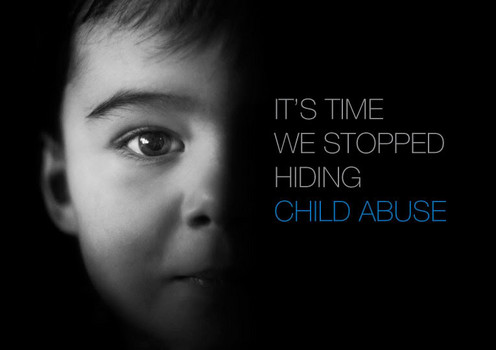
These short, powerful child abuse awareness videos (most 20–30 seconds) highlight the painful realities of foster care, trauma, and youth suicide. Share them widely so more adults understand their responsibility to protect vulnerable children.
the harsh realities facing foster youth aging out of the system and the failures of Extended Foster Care (EFC) programs
Listen to KARA’s child welfare podcast on child death and public non-disclosure. Learn how secrecy laws and closed child protection records hide patterns of failure when children die—and what real transparency and accountability should look like.
Child abuse crosses every community in America. This page gathers the strongest national statistics on maltreatment, CPS investigations, fatalities, and lifetime impacts on children’s brains and futures — along with links to leading data sources and resources for prevention, advocacy, and reform.
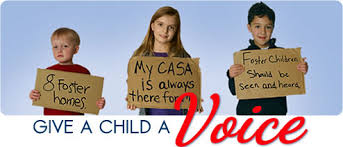
Can a working relationship survive a fundamental disagreement about child safety? On our CASA board, a Black single mother and a white older man wrestle with whether CPS protects children or destroys families. This post explores that conflict and what it tells us about fixing a child protection system that is both racist and, at times, fatally timid.
Listen to KARA’s child welfare podcast on child death and public non-disclosure. Learn how secrecy laws and closed child protection records hide patterns of failure when children die—and what real transparency and accountability should look like.
Trump’s recent Presidential Order appears in its entirety below in the Read More section of this post. Added to the order today, is conflicted and confusing language that will have a terrible impact on the quality of life for millions of America’s abused and neglected children, families, and the communities they live in.

The United States ranks near the bottom of wealthy countries for child well-being, with higher child poverty, infant mortality, and firearm deaths than its peers. Learn what the data shows and why it matters.

In 2025, the federal government declared a bonfire of deregulation in Child Protective Services (CPS) for 2026. This is part of a broader “parental rights” and religious liberty agenda. MAGA voices,
Abused and neglected children don’t have a voice in the politics and policies that rule their lives. They are at the mercy of our politicians and institutions that serve them.
National and federal data show that child neglect is the primary allegation in a clear majority of CPS cases, so removing neglect from CPS as an entry criterion would likely eliminate investigation for roughly 60–75% of the children who are currently investigated or substantiated, with some variation by state. About 7.8 million children / year are reported abused and neglected to CPS. Because child abuse is invisible, it is likely that at least that many children remain unseen and unreported. The Trump child welfare executive order leans heavily into language about “unnecessary removals” and “overreach”

Responding to the Presidential Order addressing Neglect: Keeping neglect as a primary gateway into CPS is essential because what looks like “just poverty” on the surface is often a pattern of chronic educational, emotional, and safety failures that permanently damages children and fuels intergenerational harm.

KARA is expanding our resource page to answer questions and provide access to more resources. This will be an interactive, AI-driven public platform that providing timely and accurate information on child protection, child abuse, childhood trauma, and all things related to child welfare. It will highlight key details for public and civic awareness.

Help KARA Grow Awareness of Foster Advocates and Imprint News efforts to inform Minnesota Fosters Of Resources Available To Them (share this widely
This article is derived from Hana Ikramuddin’s excellent Imprint News Article about Fosters not being notified of their rights – Read the Imprint article here.
Hana tells us the story of AIayna Ghost’s years in Foster Care from ages 7 to 18 and how she ran away almost every year looking for her family. From the article: In foster care, she did not learn she had an older sister until a social worker told her at age 13.
how foster youth are systematically failed within America’s education system. They expose how constant school changes, untreated trauma, and misdiagnoses isolate these children, often pushing them into special education, overmedication, or even the juvenile justice system
In this episode of Kids at Risk Action, hosts Ashley and Alex discuss a heartbreaking case in which a 7-week-old infant suffered 13 fractures while in foster care, allegedly inflicted by the foster mother. This case highlights the systemic issues within the foster care system, including inadequate resources, lack of oversight, and insufficient training and support for foster parents.
Kids at Risk Action, the hosts discuss the critical issue of funding cuts to Child Advocacy Centers (CACs) in Minnesota, which are essential in providing support for abused and neglected children. CACs offer services like forensic interviews, victim advocacy, and medical exams, but with the loss of 80% of their federal funding, these centers could be forced to close, leaving thousands of children without protection.

Kids at Risk Action, Michael and John examine the staggering costs and human impact of child protective services (CPS) and the interconnected child welfare and juvenile justice systems. They highlight troubling statistics, such as the high number of children reported to CPS each year, the underreporting of abuse, and the alarming link between CPS involvement and later incarceration.
Teachers feel undervalued and overwhelmed.
Turnover his high and a number of states are using
unqualified people to fill positions.
This is a book about childhood trauma, its impact on children and the impact traumatized youth are having on our communities and society. It is a guide to seeing and dealing with the most critical issues and causes of abuse, and solutions.
Google Fully Funded Initiative For
CASA’s & Service Providers

California’s Surgeon General Nadine Burke Harris has declared Adverse Childhood Experiences a public health problem and public school crisis in her state.
Nationally over 7 million U.S. children come to the attention of Child Protective Services each year
37% of American children are reported to Child Protective Services by 18

Dear Doctor,
As a medical professional you have taken an oath to do no harm, but there are ways in which you can hurt your patients without even recognizing you are doing so. What seems to you as a simple exam may cause injury to those who have been victimized by someone’s touch. This is a subject that we, survivors of sexual violence, have been meaning to discuss with you for some time now, but your authority can be more intimidating than you may know. I am also unsure if you are aware just how much power you, as a physician, hold and to the extent that you affect the lives of all of your patients. Your interactions with us travel much deeper than the physical core.
The relationship between patient and doctor is also mental, built on trust, understanding, and the security of knowing that your doctor has your well-being at heart. We, as your patients, entrust in you the most intimate parts of our bodies and our lives. But this trust has to be earned, and it is much harder for us patients who have been so severely violated. The intent of this letter is not to in any way criticize your work as a