Where to Find the Best Child Abuse Data and Help for At Risk Kids
Stop hunting in the dark. Explore the best national child abuse data sources plus frontline resources for CASAs, foster parents, educators, and policymakers.
Ethan’s story follows one boy taken from his parents into foster care, abused in placement, struggling with guilt and suicidality, and now facing adulthood alone. His journey exposes how often our foster care system fails traumatized children—and why changing life for foster youth will take all of us.
Trauma breathing is a simple, trauma-informed “belly breathing” practice that helps calm a child’s amygdala and nervous system. This toolkit offers step-by-step instructions and ready-to-use scripts for teachers, caregivers, law enforcement, health workers, and other adults who support traumatized children.
When lawmakers finally see the human and financial numbers behind child abuse and neglect, our politics can treat it as the national emergency it is—not a niche social‑services problem. Over a lifetime, the “domino effect” of abused and neglected children touches every system we claim to care about: schools, crime, taxes, public health, and public safety
Principals and district leaders are on the front lines of childhood trauma. This guide shows how to create trauma informed school climates, rethink discipline, strengthen mental health systems, engage families, use data, and advocate for policy change so vulnerable students are safer and more able to learn.
Child welfare social workers stand where children’s trauma meets family hardship and broken systems. This trauma‑informed guide shows how social workers can find invisible kids, demand real accountability, build strong teams, use mandated reporting with courage, support caregivers, protect themselves from burnout, and turn casework into lasting system reform.
Children carrying high Adverse Childhood Experiences (ACEs) live in constant survival mode. Stable homes, consistent caregiving, and trauma-informed schools can lower toxic stress, repair trust, and rebuild hope. This article explains why stability is a core intervention—and how adults and communities can help at-risk youth heal and thrive.
“157 staff injuries and 142 cleared classrooms in a single year raise a hard question: Why are Minnesota’s youngest students turning violent? This piece traces those outbursts back to unhealed childhood trauma—and outlines what K–3 schools, families, and policymakers must do differently if we want safer classrooms instead of more suspensions.”
Kids who’ve survived abuse or neglect don’t need perfect parents—they need calm, repeatable habits that make home feel safe. This guide explains five daily practices that lower reactivity, build trust, and help traumatized children feel safe at home, plus clear signs of trauma and next step resources for families.
Children are growing up with war in their faces, in real time, on every screen. This is what it does to them—and what adults can do in response.
Babies and toddlers face the highest abuse risk, yet up to 60% of maltreatment deaths never appear on death certificates. Here’s what the data really shows.
KARA is piloting an AI driven, interactive child abuse and child protection information platform—and we need your help to shape it. By exploring the pilot and sharing what works, what’s confusing, and what’s missing, you’ll help us build a tool that truly serves educators, child advocates, families, policymakers, and others working with traumatized children. Your feedback in this early stage will guide how we organize data, refine answers, and add features before a wider launch.
Hungry Like a Wolf, a powerful new play about sexual predators, mirrors what I saw as a CASA guardian ad litem: very young children raped in their own homes, perpetrators never held accountable, and trauma that reshapes every part of a child’s life. In the U.S., 7.8 million children are reported abused each year—many sexually abused—and countless others are never seen. Until adults are willing to talk honestly about child sexual abuse and its lifelong impact, there will be no real push to change systems or protect children.
Compared to other advanced nations America treats children and the people who care for them as an afterthought and then acts surprised when our schools and child‑welfare systems are overwhelmed with troubled children suffering from health and mental health issues.
Pediatricians see the front line of child abuse, trauma, neglect, and family crisis. Kids At Risk Action (KARA) is building a national child abuse information platform so clinicians, caregivers, policymakers, and families can quickly find the resources and solutions they need in one place. We’re inviting pediatric clinicians to review this work and share how it could best support screening, referrals, family education, and advocacy. If this resonates with your practice, please connect or email mike@invisiblechildren.org—and share this widely.
Social workers are the connective tissue of child protection, operating where trauma, helplessness, and institutional failure most acutely converge. Equal parts advocate, therapist, investigator, and bridge-builder, their roles are both the first line of defense and an agent of systemic change.
Parents’ anxiety can quietly shape how abused and traumatized children feel and behave. Learn one simple check and repair line that can make home feel safer.
Meta description
Each week, children are escaping brutal homes, being harmed in foster care, and caught in CPS systems that too often miss clear danger or punish families without proof. From multimillion‑dollar settlements and court battles in Texas, Washington, New York, and Illinois to new laws and policies that could reshape how abuse and neglect are investigated, this roundup highlights the most urgent child protection stories advocates, professionals, and concerned community members need to see right now.
Therapists—whether working in schools, clinics, community settings, private practices, or as part of multidisciplinary teams—are often the first, sometimes the only, professionals capable of translating the science of trauma into lasting recovery.
Research across foster care, ACEs, and maltreatment shows that abused and systems‑involved children face dramatically higher risks of self‑harm and suicide. This post walks through key studies and calls for concrete changes in child welfare policy and practice to prevent avoidable deaths.
School counselors are the vital bridge between struggling children and the support systems they desperately need. Positioned at the intersection of school, family, and community, they are often the first line of defense—sometimes the only one—against the silent epidemic of child trauma and abuse
Child abuse doesn’t stop for holidays or election years. In just the first 45 days of 2026, sad stories and new statistics are already piling up. This post tracks those cases and numbers to show how many invisible children still need our protection.
Teaching in America in 2026 means managing trauma, violence, long COVID, and historic shortages—all while trying to educate growing numbers of abused and at‑risk children. Drawing on recent data from Education Week, NCES, and school counselors nationwide, this draft chapter from Childhood Trauma – America’s Legacy explores what’s really happening inside classrooms, why teacher burnout and vacancies are soaring, and what it will take to make schools safer and more humane for kids and the adults who serve them.
Childhood abuse leaves epigenetic “scars” that behave like quantum events in a child’s developing brain—shifting the whole trajectory of a life and even echoing across generations. This post links trauma, ACEs, and America’s worst health, violence, and inequality statistics.
COVID school closures and ICE raids have combined to drive U.S. reading, math, history, and civics scores to historic lows. This post outlines national NAEP data, the states with the deepest learning loss, and what these trends mean for children’s futures, especially in immigrant and high poverty communities.
These short, powerful child abuse awareness videos (most 20–30 seconds) highlight the painful realities of foster care, trauma, and youth suicide. Share them widely so more adults understand their responsibility to protect vulnerable children.
School boards wield profound power over the safety, healing, and long-term success of children. What they choose to fund, prioritize, debate, and champion can dramatically shape school culture and community expectations around trauma, mental health, equity, and student outcomes. Yet too often, boards are
A Minneapolis teacher describes a 17 year old who carries his U.S. passport everywhere after ICE raids—showing how immigration enforcement terrorizes children, families, and classrooms.
Imagine being a child watching armed officers dragging children and teachers from your school and the chaos of citizen protesters risking violence to stop it. These attacks are destroying the fabric of your community and will make your next days, weeks, and months of classroom learning full of fear that it will happen again.
Targeting children in or around schools to enforce immigration laws is a profoundly traumatizing attack on children and ethical failure of a society’s duty protect minors.
What is it like to do social work, child protection, or nonprofit work with at‑risk children and families in this climate? How do you avoid being worn down by the steady drip of misinformation, negative media, and viral “anti‑CPS” narratives that are hitting workers and agencies hard?
Current federal and state conversations about CPS are moving in two, conflicting, directions: a push by advocates to sharply limit “family policing,” reduce mandatory reporting, and narrow or remove “neglect” in law, and an opposing concern from child protection and public health experts that weakening these protections without robust alternative supports will increase lifechanging child abuse and trauma for millions of America’s most vulnerable children.
This study of 251 neglected children and 502 community matched control group over a 17 year period found that 32% of child abuse fatalities occurring in the same year were attributed to child neglect alone. Most of these children were unnoticed by teachers, law enforcement, healthcare workers and others and received no child protection or welfare services.
This from Idaho today. The tip the iceberg reported on by Safe Passage for Children of Minnesota recently. Add to this the Federal Government’s “Bonfire of Deregulation” millions of abused and neglected children will be underserved and many more of them die of trauma and abuse in 2026.
While Trump’s child welfare orders do not delete “neglect” from law, they lean heavily into language about “unnecessary removals” and “overreach” that can be weaponized by parental rights, MAGA, and some religious groups to argue that neglect rarely justifies CPS involvement.
How the order’s framing minimizes neglect
Richard Wexler’s Child Neglect in America article uses a Swedish child neglect study to make sweeping claims about “American child neglect and poverty,” even though childhood conditions in the two countries are radically different. In the Nordic welfare states, far fewer children live in deep poverty and families receive broad supports like child benefits, paid leave, subsidized childcare, and universal health care, while U.S. child poverty is roughly twice as high and basic needs often go unmet without thin, means‑tested programs
Below are KARA’s researched useful videos and podcasts on
child abuse and neglect mental health
ACEs, trauma, healing, and skill‑building cluster into a few groups: big‑picture science, practical trauma‑informed care, and survivor‑oriented healing content.
Mental Health RESOURCE BOX listing in your favorites for PTSD Coach, PTSD Family Coach, and 988/Crisis Text Line as always‑available supports for abused and neglected children, youth, and adults.
Crisis lines (U.S.)
Enhancing Child Protection Awareness on Wikipedia: A Research-Based Approach to Expanding and Improving Information on Child Abuse, Policy and Protective Services Cavendish University Uganda
Portia died shortly after being brought into the operating room. Leroy called me early in the morning and told me that the surgery had been delayed too long. There was no way the doctors could save her at that point.
Ethan was removed from his parents at a young age. I have only come to know him briefly through the course of my work with him at an inpatient facility.
At some point, we and our policymakers must recognize what a crisis 7.8 million children being reported every year to child protective services is. Research suggests the true number of abused children is likely twice as high due to the invisible nature of the epidemic. This life ruining crisis has been escalating for decades, making chronic generational child abuse and neglect one of the most misunderstood and under-addressed public health emergencies in our history.
Isabella was taken into foster care when her birth home was raided by authorities for possession of drugs. She was found locked in a room by herself. She was silent – never spoke. Isabella had never been outside until she was placed into foster care at 7.
Finally removed from the home forever, but not healed. The invisible scars we carry remain.
Life with our painful childhood memories, triggered behaviors and habits in this world is terribly difficult to manage.
Healing from a broken past is difficult.
No more punishment please.
Watching mom beaten or raped is terror. Homeless mothers and children are many times more likely to be assaulted and molested.
Children of addicted and alcoholic moms and dads are beaten and raped more often too.
Trauma is *torture. Watching mom being raped is torture.
Emma and Michael expose the staggering economic cost of ignoring childhood trauma. With U.S. taxpayers absorbing trillions in health care, education loss, criminal justice, and reduced productivity, the data paints a devastating picture:
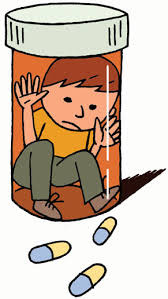
Emma and Michael expose how childhood trauma is quietly devastating the lives of millions of children—some as young as toddlers—who are misdiagnosed, overmedicated, and left unsupported in overwhelmed systems.
This episode of the Kids at Risk Action podcast dives into the science and societal impact of Adverse Childhood Experiences (ACEs)—early life traumas like abuse, neglect, and household instability that dramatically shape physical and mental health outcomes. Through powerful commentary from child advocates
KARA compiles articles, research, and reports on child abuse and child protection around the nation & internationally. This reporting covers child suicide and suicide statistics in the100+ articles listed below.
In this PODCAST episode of Kids at Risk Action, Emma and Michael expose the massive $14.1 trillion economic toll of untreated childhood trauma in America. They connect the dots between Adverse Childhood Experiences (ACEs) and long-term impacts on health, education, and the justice system
Both my parents were abused as children. Child abuse is epigenetic – like hair and eye color. My childhood went away when the abuse started. I lived in a constant state of fight or flight, freeze, or fawn and when there was no escape the only thing left was to FAIL. A child trapped in inescapable child abuse trauma fails all the time.