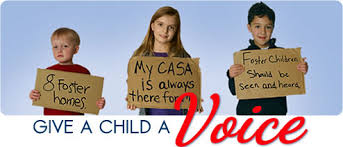
CASA MN Newsletter (Guardian ad Litem News & Updates)
CASA MN Newsletter (Guardian ad Litem News & Updates)
Details
CASA MN Newsletter (Guardian ad Litem News & Updates)
Details
This short article by Laurel Ferris in Women’s Press clearly articulates what CASA Guardians do and why children need them.
From the article;
Details
Dear Reader,Allowing the State board to eliminate 10,000 future volunteers (over the next 40 years) at a time when we are reporting on children murdered by their parents may be an unfixable mistake costing even more children their lives.
Rebuttals to the State MAD report from several top child advocates here;
Details
The tortured death of 4 year old Eric Dean in 2013 prompted the first in depth reporting on parental child murder I can remember. CASAMN gave the reporter (Brandon Stahl) an award and had him speak at our annual conference.
At that time, several children in my caseload had been almost murdered by their caregivers.
A number of my caseload kids (4,5, and 6 year old children) had suffered years of unspeakable sexual abuse and other violence. Their stories never made the paper.
Details
A Storm Is Brewing (4m) Will CASA GAL program end because of misinformation?
Let’s Go KARA (3m) Supporting Child Friendly Initiatives
Don Shelby on Child Protection (30 seconds)

When we say it’s not brain surgery it’s because a task is easy – it doesn’t demand much training or experience. There are times the phrase is meaningful and times it is painfully inappropriate. This article in the Star Tribune explains that corrections officers, human services technicians and staff in state veterans homes will not…
Details
The analysis by MAD is not, in my view, sufficiently compelling in some important respects to support the board in managing this risk. While I understand from a previous board meeting I attended as well as a legislative hearing on the topic that the board has been guided in this deliberation by staff, this decision is yours alone, and you alone will be accountable for what happens in the future as a result.
Details
We are fighting to keep the community volunteer CASA
Guardian ad Litems in the Child Protection System.
We need your written public comments here.
Details
To save the CASA volunteer program in MN your comments need to be heard by program management. Please review the report and the rebuttal and share your views in the link above. CASAMINNESOTA’s rebuttal to the MMB report appears below.
Details
2020, he child and teen gun death rate in the U.S. was more than 3 times higher than that in Turkey, the country with the next highest rate; 11 times higher than in Israel; 19 times higher than in Switzerland and 85 times higher than in the United Kingdom
Details
SAYING GOODBYE TO 1000’S OF VOLUNTEER CHILD ADVOCATES & Community Involvement & Trust In One More Community Institution. Since 1981, thousands of community volunteers have spent thousands of hours working to better the lives of Minnesota’s at-risk children. End this program, they will disappear and no more will follow.
This will result in weakened community awareness, less community involvement and an incalculable loss of…
Details
Child poverty more than doubled between 2021 and 2022. Child poverty and near poverty in America was around 60% when I grow up in 1960’s. Compared to other industrialized nations we have never been a leader – always between 25th and 40th in child poverty rankings among our peers. From the 1960’s through the 1990’s, our childhood poverty rates hovered around 30% (significant multiple of the other advanced nations).
Details
The push to diminish/eliminate the CASA Volunteer workforce of Hennepin County’s Guardian ad Litem Program is impacting office morale for both paid and volunteer GALS. We’ve gone from about 250 volunteers to 32 remaining under new leadership in the last five years. CASA’s supporting program, CASAMN has over 200 volunteers waiting to be GALs –…
Details
If beatings, rape and terrible things done to child victims in my CASA volunteer Guardian ad Litem caseload were done by me, I would be in jail today. If sex abuse of these children were involved, I would be restricted from living in certain areas of my community and notice of where I live required to…
Details
SAYING GOODBYE TO 1000’S OF VOLUNTEER CHILD ADVOCATES & Community Involvement & Trust In One More Community Institution. Since 1981, thousands of community volunteers have spent thousands of hours working to better the lives of Minnesota’s at-risk children. End this program, they will disappear and no more will follow.
This will result in weakened community awareness, less community involvement and an incalculable loss of…
Details
KARA is working to make lawmakers and policy makers see the value of community volunteer CASA guardian ad litems in Child Protective Services.
To do this, we are seeking stories from 18 & up folks that have come through child protection with the help of a volunteer CASA guardian ad litem.
You may remain anonymous.
Please contact me directly – mike@invisiblechildren.org with STORY in the subject line.
Details
The complete report can be read HERE. This post emphasises the GAL program’s effort to eliminate the CASA community volunteer Guardian ad Litems. The author made notes and corrected several minor spelling errors (notes are in parenthesis and in bold).
Hennepin County participants: Jodi Wentland; Dan Rogan; Lori Whittier; Evangeline Filosi; Patricia Zagaros; Sherry Smith; Lisa Bayley; Kwesi Booker; Michelle Lefebvre; Lori Munsterman; Fintan Moore; Lauren Kewley; Madeline Johnson; Shanese Reed; Rachelle Loewenson Stratton; Meredith Martinez: Lolita Ulloa
Details
Children dying at their caregiver’s hands while known to Child Protective Services
Details
Social media, political and community outrage
and COVID Lockdown stress are overwhelming mental health caregivers and institutions in every community – Child suicide/self-harm are rising dramatically Speak out, Share this widely
Details
Hundreds of MN children are being abandoned by their caregivers in MN hospitals. Many are children raised in toxic homes then shuttled off into State/County foster and group homes
Details
I must address the article in the KARA newsletter today (last Friday) where the failure to protect these known victims is not laid at the feet of CPS.
Details
There is a real lack of data and transparency in CPS which makes it hard to know outcomes short of child death.
72% of of the 88 child maltreatment deaths studied (complete study below) were known to CPS. We do know that there were many reports of life changing violence, neglect and abuse but few follow ups.
During the lockdown, abused children were literally trapped at home with their abusers. This multiplied the stress on Child Protection Services as an institution and on the social workers doing their best in an impossible situation.
Details
Free College for ALL MN Foster Youth
First in the Nation
A Really Big Deal
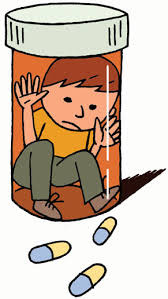
COVID’s impact on children’s mental health will be felt for a very long time. Especially vulnerable are children suffering from extended exposure to violence and deprivation that lived in toxic homes without access to help during the pandemic lockdowns – Read the MedPage article here…
Details
Neighborhood House in St Paul is hosting
KARA’s INVISIBLE CHILDREN Necessary Conversations Exhibit
April 24-28 for April – Prevent Child Abuse Month.
Stop by the Wellstone Center Atrium and Check us out
Thank you Rich Gehrman and Safe Passage for Children of Minnesota for supporting Minnesota’s 10,000 CASA (over 40 years) Community Guardian ad Litem volunteers!
Details
Aaliya Goodwin. This is one of the 88 stories of children dying at the hands of their caregivers reported in the recent Safe Passage For Children investigation of child death in Minnesota. The report suggests why this tragedy is happening in our state and how we can make life safer for at risk children (in…
Details
Eli Hentges. This is one of the 88 stories of children dying at the hands of their caregivers reported in the recent Safe Passage For Children investigation of child death in Minnesota. The report suggests why this tragedy is happening in our state and how we can make life safer for at risk children (in the read more at the end of the article). Please share this with your contacts and State Representative.
Details
This is one of the 88 stories of children dying at the hands of their caregivers reported in the recent Safe Passage For Children investigation of child death in Minnesota. The report suggests why this tragedy is happening in our state and how we can make life safer for at risk children (in the read more at the end of the article). Please share this with your contacts and State Representative.
Tayvion Davis, Hennepin County
The American Academy of Pediatrics (AAP), American Academy of Child and Adolescent Psychiatry, and the Children’s Hospital Association have joined forces to declare a national emergency in children’s mental health, largely due to the COVID-19 pandemic. “Today’s declaration is an urgent call to policymakers at all levels of government — we must treat this mental health crisis like the emergency it is,
Details
If you read this blog, you know how hard it is for Minnesota’s abused and neglected children to find the help they need to thrive. If you have not read the investigative report of child fatalities known to CPS by Safe Passages for Children of MN, please read it here. Pages 22+ tells the sad…
Details
Repeated self-harm and hospital trips for healing were his normal behavior when he was depressed. He would cut himself and stuff objects into the wound – a paper clip, staple or anything he could find. This poor boy was a product of rape and incest.
His mother was raped by her father when she was 13. She abandoned her son to State Care at birth. Acanto never experienced love or the warmth of a family. Alito shared with me that the only love or tenderness he ever felt was nurses caring for his wounds.
Details
Conditions in Child Protective Services (CPS), foster care or in the lives these children live are unknown to most of us.
When the community doesn’t perceive a serious problem it will ignore it and the problem festers. This is why many city dwellers are afraid to ride the bus, prisons are full, and schools are struggling.
Details
We know that the punishment model does not facilitate healing or learning – It is responsible for most failed grade level reading, math and history scores. It is a primary reason for underperforming schools.
Details
Are children property of their parents even if those parents
are violent, addicted, severely mentally ill or dangerously criminal?
Do teen and preteen mothers own their babies?
Is this child’s child doomed prior to birth?
88 Minnesota Children died at the hands of their caregivers recently
Details
a cruel but accurate point. Our community has a passion for safeguarding adult rights of guns and abortion.
Safe Passage for Children investigation of child death in Minnesota
Details
There is more to child abuse than bruises, rape and starvation.
27 states allow withholding life saving medical treatment from children if you tell people your religion forbids it . Criminal and civil immunity means it is not murder when the child dies.
A few years ago, Kansas State Rep Gail Finney vowed to pass a bill that allowed caregivers to leave bruises and cause bleeding. Arkansas State Rep Charles Fuqua promoted the death penalty for rebellious children (based on religious grounds).
Details
CONTACT: Rich Gehrman, Executive Director, Safe Passage for Children of Minnesota (651) 303-3209; gehrm001@umn.edu Report documents multiple systemic failures in cases Of Minnesota children killed due to maltreatment 8 YEAR OLD AUTUMN HALLOW’S MURDER (KSTP video) Minnesota Child Fatalities from Maltreatment 2014 – 2022 Executive Summary From the report; This study of children who died in…
Details
Most lawmakers know what a big percentage of their budgets is going to social programs like child welfare and child protection.
Not as many understand how tax dollars they appropriate are working to solve the problems they are meant to solve.
Details
National Adoption Month
One out of 25 U.S. families have an adopted child. Half of the 135,000 adoptions are from the foster care system. There are over 100,000 eligible children waiting to be adopted.
Minnesota’s Child Protective Services (CPS) received 85,000 child abuse calls in 2019 (about 1/3 of the calls were investigated).
Details
Report documents system failures in cases of Minnesota Children Killed due to Maltreatment short (KSTP video)
Details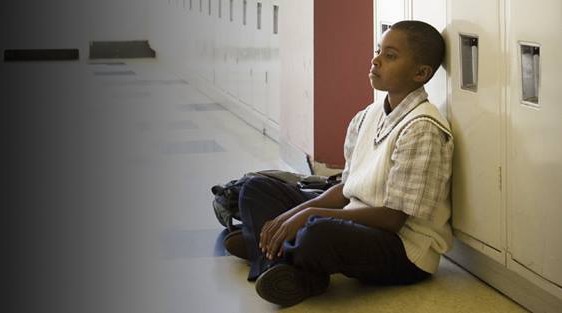
This Annie E. Casey Foundation survey of Black youth in February 2021 demonstrates a rising trend of Black youth incarceration Post COVID.
Black youth in juvenile detention on Feb. 1, 2021, reached a pandemic high, while that of white youth was the second lowest recorded in more than a year.
Details
Grace, a Black 15-year old who was sent to a juvenile detention center for failure to submit schoolwork.
In an email to Grace’s caseworker, her teacher stated that Grace was “not out of alignment with most of my other students.”
Tens of thousands of children have struggled to adjust to the online learning environment the coronavirus created. ProPublica cites 15,000 high schoolers in Los Angeles alone failing to log in or complete schoolwork. Yet, a judge presiding for Oakland County Family Court Division, ruled in May that not completing schoolwork violated Grace’s probation.
It’s impossible to determine the frequency of cases like Grace’s, but one thing is clear. Children’s health and safety must be prioritized. We will continue urging states to stop admissions and to release kids from juvenile facilities. No child should be in juvenile detention for missing homework.
Details
Recent Star Tribune articles about juvenile justice and explosive growth of crime in our community miss the heart of the matter. We keep putting fires out that could have been prevented. The car jackings, transit crimes and other juvenile violence making life miserable for so many of us didn’t begin when these children became juveniles. It started with traumas suffered in the home mostly caused by parents that suffered the same violence and abuse as children.
Details
Teachers, social workers, law enforcement and foster/adoptive parents dealing with State Ward children are often the last chance that a child has to grow up to lead a normal life.
Details
This conversation about the study of MN child fatalities is eye opening and terribly sad. Ignoring brutality being done to children allows it to continue and to fester. Let’s all commit to caring for other people’s children. It will be a better place to live for all of us if we do.
Details
What is transparent and measured can be identified and improved. What is not transparent and measured remains unknown and can fester.
In business, Cost Benefit Analysis focuses on ROI (return on investment). ROI is based on “assets”, “net income” & “profitability”. That’s what business is about (money). Corporations have extremely detailed and accurate methods of measuring their “money”…
Details
What the jury and others may not have known before the life sentence is that by the age of 14 Miller attempted suicide four times. The first time he tried to kill himself was at the age of six.
Due to experiencing abuse by his stepfather and his mother being a drug addict and alcoholic. The victim was actually his mother’s drug dealer at the time.
Details