
The Children Nobody Counts
My first case started on a hospital suicide ward with a four-year-old who had watched her seven year old sister raped and beaten for years.
Details
My first case started on a hospital suicide ward with a four-year-old who had watched her seven year old sister raped and beaten for years.
Details
Crime costs America between $2.2 trillion and nearly $6 trillion a year, and most of that bill is paid in grief, not dollars. Here is what the research says about families, juvenile carjacking, and the child abuse that so often comes first, and why an American child has less to stand on than children in 70 other countries.
Details
How much does crime cost us? More than you think. The most cited study puts it at $2.6 trillion a year. Other economists, counting fear, security systems, and stolen money, put it as high as $5.76 trillion. Only about a quarter of the $2.6 trillion is hospital bills, police, courts, and prisons. The rest is pain, grief, and lives cut short
Details
Growing up in a home beaten, raped or starved by the most important authority in your life, means that for you, authority is not to be respected – it is to be hated and feared. Real life stories about this here.
Uncooperative often violent response to authority figures is normal for traumatized children. It’s driven by repeated pain and terror visited upon a child that has been unable to escape repeated trauma and abuse.
Details
John Jay documented 10,667 victims of priest abuse in the United States between 1950 and 2002.
Roughly 200 children a year.
In one year, 532,228 American children were confirmed abused or neglected by their own caregivers.
Details
KARA’s First Pop-Up Think Tank A small, facilitated working session bringing together people who know KARA’s work and can help shape the organization’s next chapter. KARA is at a turning point. After more than 25 years of advocacy, research and public education, Kids At Risk Action is building the infrastructure needed to expand its work.…
Details
A 13-year-old stood alone before an immigration judge in Texas last week. Twenty-five children sat on the benches, some as young as 3. This is what they said, and why it is happening now.
Details
What We Learned From 1212 (Nothing) My first visit to a four-year-old was in the suicide ward of a local hospital. Four. Not fourteen. She was in a locked unit because the adults responsible for her had done something to her that made a child that young want to stop existing. I was her Guardian…
Details
Star Tribune Nowhere To Go For Most Troubled Youth, crime, preteen moms and juvenile injustice
Details
Foster Adopt Minnesota runs the HELP Program, a warmline for Minnesota’s adoption, foster care, and kinship communities, and can help families find vetted therapists who work with adoptive, foster and kinship families. Fosteradoptmn + Minnesota Foster Advocates, https://www.fosteradvocates.org/resource-guide
Details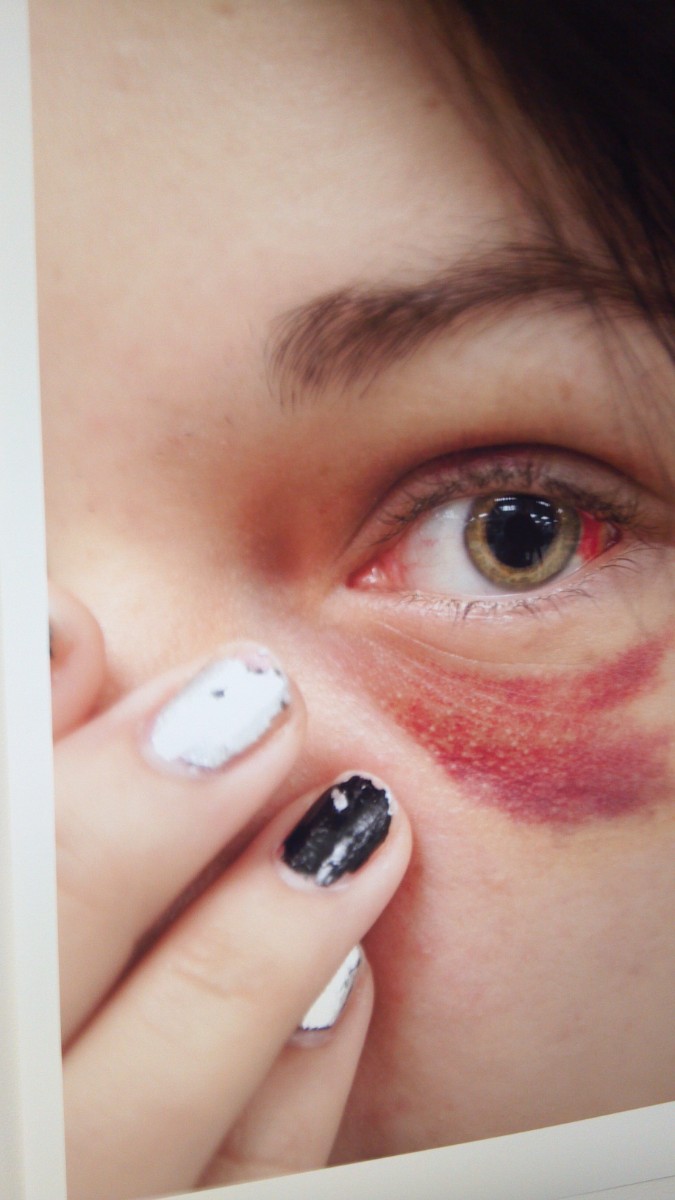
WI Child Abuse Reporting April 1- May 9 2024
Details
Minnesota ranks fifth in the nation for child well-being and near last for racial equity. Both are true. Here is what the numbers show across education, juvenile justice, child protection, and health care, and what actually works to change them.
Details
Firearm injuries are now the leading cause of death for children and teens ages 1 to 19. More than 4,400 kids ages 0 to 19 are shot and killed each year and more than 17,000 are shot and wounded, an average of 60 children a day. An estimated three million children witness a shooting each year.
Details
The new KARA website is live at kidsatriskaction.com. Thirty years of reporting on abused and neglected children, the Deep Dive reports, the podcast, and the data, all in one place. Before we call it finished, we want your reaction (one sentence is fine)
Details
Half of foster youth have been sexually abused. A quarter attempt suicide. Sixty percent carry a chronic illness or developmental delay. These are not estimates from advocates, they are federal data and peer-reviewed research. Here is what the numbers say about life inside Child Protective Services, and what would change them.
Details
KARA sporadically compiles articles, research, and reports on child abuse and child protection around the nation & internationally. Child rights, safety, protection are just a few of the topics you will find addressed in the approximately 100 articles below.
We are seeking a volunteer to make this a regular feature on our website. Contact Hello@invisiblechildren.org with volunteer research in the subject line if this might be you.
KARA is seeking university research on the topics of childhood trauma, children’s rights, parental rights, foster care, adoption, child protection, children’s mental health, juvenile justices and child advocacy. Contact Hello@invisiblechildren.org with volunteer university research in the subject line if this might be you.

A draft federal rule would pay married stay-at-home parents about $9,000 a year per child, using money from the fund that helps low-income parents work. Eighty percent of the families using that fund now are single working parents. That rule is one item on a long list, and here is the whole list.
Details
William Evans was seven years old. He had a developmental disability. He was found dead at a duplex in Cincinnati. When Hamilton County officials were asked how a thing like that happens, one of them gave an answer that should stop you cold. Families who abuse children move often. They move to avoid relationships. They move to avoid connections. And a child nobody knows is a child nobody reports.
That is the whole failure in one sentence.
Five Minnesota daycares in one month. South St. Paul, Rochester, Prior Lake, Hastings, Duluth. Licensed providers charged with hitting, slapping, and bruising the children in their care. The youngest was four months old. Here is what a single month of Minnesota child abuse headlines actually looks like.
Details
A 14 year old boy who planned his death by cop. Tortured from four to seven. Twenty-nine foster placements. Police from the age of nine. He needed mental health services and got officers instead. Children traumatized by their caregivers fear and hate authority.
Details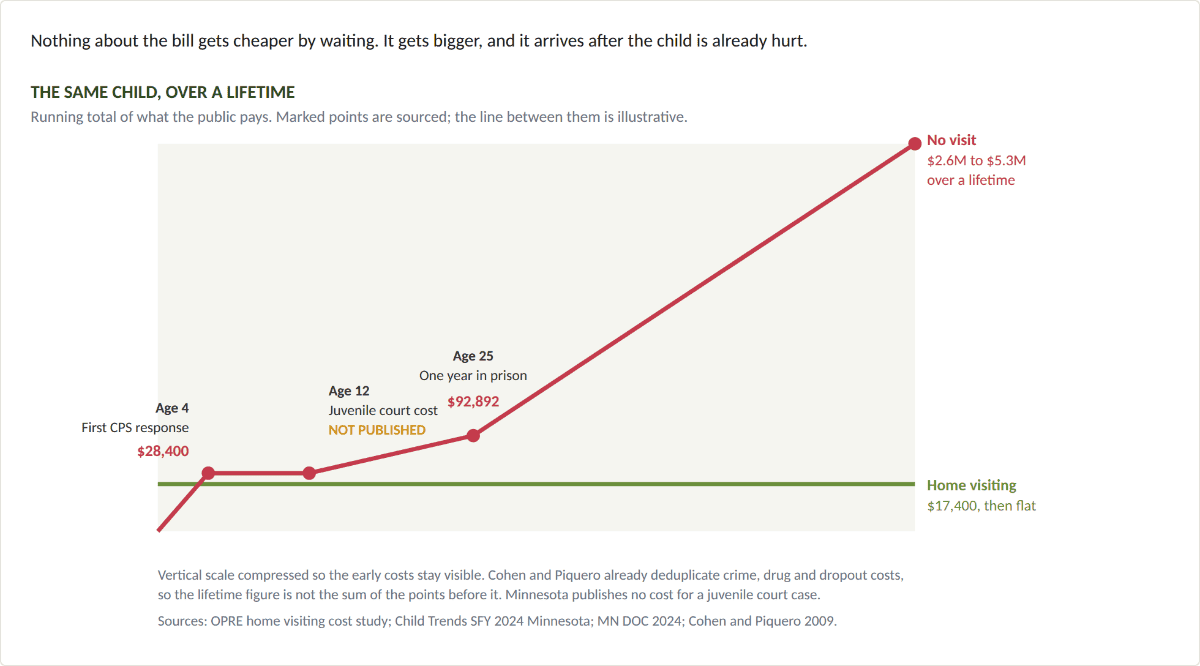
A randomized trial of 4,229 families and Minnesota’s $848 million child protection bill. What we pay after the harm, and what prevention actually costs.
Details
From the Washington Post yesterday, most foster care children on antipsychoctic drugs get them for far too long and without medical justification. 2/3 of the nearly 700 claims studied raised high-risk “quality of care” issues. As a long time CASA volunteer guardian ad-Litem, many of my case kids were on multiple drugs simultaneously and many of them hated being forced to use them. Some kids threw the drugs away.
In Minneapolis, I would like to know (there should be more transparency) if six year old Kendrea Johnson’s suicide by hanging involved psychotropic medications. She was a very troubled foster child, in therapy and had talked about homicide and suicide. When Jeff Weise killed himself, his grandfather and 14 others he had talked about suicide and homicide and was taking Prozac.
7 year old foster child Gabriel Myers hung himself and left a note about how he hated Prozac. KARA’s video interviews include families, a City Councilman, and other professionals talking about antipsychotic medications, very young children and suicide. This subject needs our attention now. It is cruel punishment for a child suffering from the traumas of abuse and removal from a birth home to be dealt with.
There are 3 children’s hospitals in the metro area and NO children’s mental health hospitals and there are 800 to 1000 emergency psychiatric visits at HCMC every month (many of them children).
This conversation is overdue.
What we don’t know cannot be dealt with and will not be improved. Let’s stop the next awful six year old suicide.
Details
A new federal study proves home visiting programs improve parenting, mental health, and family stability for years. Here’s the evidence and what Minnesota can do next.
Details
Learning cannot come before safety for many traumatized foster children. Practical, trauma-informed strategies can help rebuild trust, curiosity, confidence, and skills one small moment at a time.
Details
Minnesota’s child protection system must be judged by whether children are safe not by paperwork, promises, or closed cases. Learn about the need for transparency, data, accountability, and public action.
Details
Rising pediatric hospitalizations for suicide and self-harm expose a child mental-health crisis—and a major data gap in child protection. KARA calls for earlier trauma-informed care, stronger safety systems, and public reporting on whether children in CPS are truly safe and healing.
Details
Kendrea Johnson was six years old when she died in foster care after documented suicidal thoughts and serious warnings. Her death raises urgent questions about trauma-informed care, child-safety coordination, and whether child-protection systems measure outcomes that matter.
Details
Child Protective Services often measures reports, investigations, placements, reunifications, and case closures. But those numbers do not reveal whether children become safer, healthier, better educated, stably housed, or able to thrive as adults. KARA outlines the missing long-term outcomes lawmakers need to track and a privacy-protected framework for measuring whether public systems truly improve children’s lives.
Details
Half of foster youth have been sexually abused. A quarter attempt suicide. In Kentucky, 304 children slept in state office buildings with no showers. But cash support cuts removals, kinship licensing is adding homes, and every extra year in care past 18 lowers homelessness and arrest. Here is the evidence on both sides, all of it sourced.
Details
How did you come to terms with your identity?
Being queer and the sexuality part wasn’t as hard for me. I always knew I liked women. The journey was then finding out who else I liked and what I didn’t like. I feel like when you first join the community, you’re not always presented with how many identities there are. I feel like a lot of people tend to come in uneducated, and I think that’s definitively how I came in. I come from a very homophobic town, so we didn’t have that many people that were out. I didn’t know much. I started identifying as queer because I’m still not sure. My gender identity took a lot longer…
Details
The Economic Cost of Childhood Trauma in America Important note about these figures Child abuse, childhood trauma, foster care, juvenile justice, crime, incarceration, health care, school failure, addiction, homelessness, and lost productivity are connected. They also overlap. The same child or adult may appear in child protection, special education, health care, foster care, juvenile justice,…
Details
Punishing children who have been harmed in toxic homes does not heal trauma, improve learning, or make communities safer. It often deepens the pain that leads to school failure, mental-health struggles, justice-system involvement, and generational child abuse. This post explains why the ACEs, Adverse Childhood Experiences, healing model offers a better path: trauma-informed schools, health care, child care, law enforcement, and public policy that help children build the skills and safety they need to heal and thrive.
Details
Jonathan Swift’s 1729 satire, A Modest Proposal, used shocking imagery to expose the cruelty of public policies that treated poor Irish children as disposable. This post connects Swift’s warning to the realities faced by abused, neglected, homeless, incarcerated, and foster-care-involved children in America today. When society accepts policies that deny children safety, education, health care, stable housing, and meaningful support, it creates the very cycles of trauma, crime, poverty, and generational child abuse it claims to oppose. KARA shares this historic work as a call to replace indifference and punishment with prevention, protection, healing, and public accountability.
Back in the day, these writings were the modern equivalent of you tube or a precursor to Twitter and consumed voraciously by all who could read (or read them to others).
Public policy treated poor Irish more like animals than people and Irish children were doomed to lives of crime, prostitution, and abject poverty.
Was Swift’s underlying argument that death might be preferable to children doomed to disease, crime, prostitution, & the cruelties suffered by abandoned children of his time?
Details
As a governor, you can move child protection from fragmented crisis response to coordinated, prevention centered, trauma informed systems that truly improve children’s lives. This article shows how executive vision, upstream budgets, transparent data, trauma informed and equity driven standards, foster care and juvenile justice reforms, and expanded mental health access can turn child safety and healing into core state priorities rather than side projects.
Details
As an attorney general, you hold extraordinary power to shape whether abused and traumatized children are protected or abandoned to failing systems. This article shows how you can make child welfare and trauma a core priority, investigate systemic failures and enforce mandated reporting, litigate and regulate for transparency and reform, tackle disparities and overmedication, and lead policy, coordination, and public engagement. By using the full authority of your office, you can turn systemic child harm from a hidden crisis into a mandate for justice and healing.
Details
As a state lawmaker, you have enormous power to shape whether vulnerable children experience systems as punitive and chaotic or protective and healing. This article lays out a roadmap for making child safety a statewide priority, mandating transparency and equity, investing in prevention and early intervention, embedding trauma informed standards across systems, reforming foster care and juvenile justice, and guaranteeing mental health care and strong aftercare. By grounding your statutes, budgets, and oversight in ACEs science and lived experience, you can turn the tide for children’s safety, healing, and long term well being.
Details
As a mayor or county administrator, you cannot police your way to safe childhoods. When children grow up in toxic homes, criminalizing trauma driven behaviors only fuels future crime and broken families. This article offers a governing blueprint that shows how you can lead with a child centered civic vision, fund prevention and wraparound help, reform public safety and policy, and build trauma informed systems that truly protect children and strengthen your community.
Details
You sit on the front line of child protection. Your choices about housing, policing, schools, public health, and mental health determine whether children are shielded from preventable trauma or left to face it alone. By investing in upstream prevention, trauma informed policies, accountable justice and housing systems, and strong community supports, you can transform your city or county from a crisis response machine into a true child protection engine.
Details
There is no shortage of disturbing stories about violent children & authorities using violent means to control them. Today, the U.S. expels more children from daycare than any other industrialized nation and the levels of violence in our schools is frightening and harmful to all of us.
There is nothing more disturbing than watching a video of an armed 200 pound police officer twisting the arms of a 50 pound special needs child into a painful behind the back steel handcuffed position as the boy cries uncontrollably in his classroom, unless it is reading about the St. Louis Sheriff’s deputy tasering an 11 year old boy and threatening to sodomize him (Sheriff Mulch “nothing out of the ordinary…, followed protocol)
These stories and recent horrific police shootings of juveniles are a signal of overwhelmed institutions unable to deliver the most basic protection and safety services to the communities that employ them. Don’t blame service providers -it is lawmakers and administrators defending archaic policies that just don’t work anymore. Neither police nor teachers are able to nor should they be required (with the training we give them) to handle the deep and troubling behaviors of very disturbed children). Traumatizing five and six year old children because they have behavioral problems is just awful and it makes things so much worse for the child (and our society).
This story out of Texas, demonstrates how the police might better deal with troubled youth with an approach that recognizes the significance of mental health issues impacting police/child interaction. We need to do a 180 on dealing with mental health issues. Now.
The sooner we the people recognize that this is all about mental health and that schools and police departments are not mental health service providers, the safer our schools and city streets will become.
All adults are the protectors of all children.
Details
A practical guide to helping at-risk teens with 25 national organizations, volunteer options, websites, and contact information.
Details
Child welfare systems across the country are facing a deepening placement crisis. As group homes, residential treatment centers, and detention beds have closed without real alternatives, older youth with high-intensity behavioral and developmental needs are being warehoused in hotels, emergency rooms, and psychiatric hospitals. KARA presents Judith Schagrin’s essential article on how we got here and why policymakers must rethink residential care, remedy the unintended consequences of the Family First Prevention Services Act, and build safe, humane options for children who cannot live at home.
Details
Child protection systems too often expose children to continued abuse and neglect instead of keeping them safe. This article explains what that means and offers concrete “what I can do” options for any reader who wants to help at risk children in their community from sharing investigative reports with state reps, to raising awareness, inviting speakers, supporting nonprofits, and exploring direct volunteer roles in my community.
Details
Psychiatrists can help abused and neglected children even when specialty care is scarce by using trauma-informed care, safer prescribing, community partnerships, and advocacy
Details
America’s children are living through a historic experiment: what happens when a president dismantles the programs that feed them, teach them, heal them, and protect them. Under this administration, at risk children face more hunger, less health care, fewer early education opportunities, harsher immigration enforcement, and weaker child protection. This post explains what the future holds for America’s at risk children and what we must do now to change that.
Details
CASA Guardian ad Litem volunteers stand beside abused and neglected children in court, offering time, continuity, and a purely child focused voice. Here, CASAs explain their role in their own words, and we outline how you can explore becoming a CASA volunteer yourself.
Details
A federal judge recently told Texas child welfare officials that “children are dying on your watch” and accused them of protecting their bureaucracy instead of children. Minnesota’s own record of child fatalities from maltreatment including the catastrophic failure that led to four-year-old Eric Dean and five-year-old Kendrea Johnson and so many others: https://safepassageforchildren.org/wp-content/uploads/2024/01/Safe-Passage-for-Children-Child-Fatality-Report_Year-2_2022-2023.pdf shows this is not just one state’s problem.
Details
Project 2025 and allied budget plans would slash or eliminate programs that children rely on for health care, nutrition, early childhood education, civil rights protections, and child welfare support. KARA summarizes CWLA and other advocates’ warnings, shows how child poverty and hunger are already rising, and urges you to share this information and call your lawmakers before more supports for kids disappear.
Details
Most CPS reporting gives lawmakers only snapshots: how many kids are in care today, how many reports this year. KARA argues that counties must keep de identified, family level longitudinal records so legislators can see multi generational involvement, understand which interventions reduce repeat removals, and design policies that break cycles of trauma instead of just managing them case by case, year by year.
Details
Minnesota’s new Supreme Court Council on Child Protection and Maltreatment Prevention is building a statewide blueprint to prevent child abuse and improve how the system works for families once they’re involved. Safe Passage helped launch this effort and is now tracking early reforms from Family Resource Centers to better training, legal representation, and foster youth supports and highlighting ways stakeholders can give input.
Details
Physicians are often the first and only trusted adults able to see the hidden injuries of child abuse and neglect. This post explains what physicians can do about child abuse: recognize red flags, use ACEs and trauma‑informed care, act on reasonable suspicion, and advocate so fewer children suffer in silence and more find safety and healing.
Details