
Minnesota Children Killed By Caregivers While Known to CPS (& how to stop it)
2023 Investigative Report on MN Children Killed
by Caregivers While in Child Protective Services

2023 Investigative Report on MN Children Killed
by Caregivers While in Child Protective Services

In 2025, the federal government declared a bonfire of deregulation in Child Protective Services (CPS) for 2026. This is part of a broader “parental rights” and religious liberty agenda. MAGA voices,
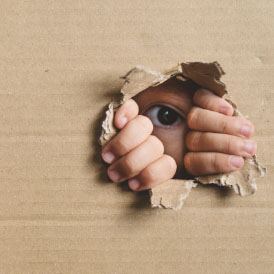
Abused and neglected children don’t have a voice in the politics and policies that rule their lives. They are at the mercy of our politicians and institutions that serve them.

Because CASA and Children’s Advocacy Centers remain largely unknown, at‑risk children and families lose critical lifelines they don’t even realize exist. Low public awareness means fewer mandated reporters, neighbors, teachers, and relatives can to turn when they suspect abuse—or how to push for a CASA volunteer or a CAC referral when a child enters the system. It depresses volunteer recruitment for CASA and philanthropic support for both models, limiting how many children can be served. It also allows policymakers to underfund these services…
Richard Wexler’s Child Neglect in America article uses a Swedish child neglect study to make sweeping claims about “American child neglect and poverty,” even though childhood conditions in the two countries are radically different. In the Nordic welfare states, far fewer children live in deep poverty and families receive broad supports like child benefits, paid leave, subsidized childcare, and universal health care, while U.S. child poverty is roughly twice as high and basic needs often go unmet without thin, means‑tested programs

I have sat in emergency rooms at 2 a.m. holding the hand of a child who flinched at every sudden sound, because of the things done to her at home. I have watched little ones arrive at foster homes with all their belongings in a trash bag, eyes wide and silent, trying to be “good” so no one will send them away again. I have seen teenagers scream, swear, and hit people, when what they really were was traumatized, terrified, and broken.

Responding to the Presidential Order addressing Neglect: Keeping neglect as a primary gateway into CPS is essential because what looks like “just poverty” on the surface is often a pattern of chronic educational, emotional, and safety failures that permanently damages children and fuels intergenerational harm.

The following articles illustrates how government policy and law has yet again failed to ensure the safety and well-being of children. Children continue to face sexual abuse, gendered based violence and health crises, among other disastrous circumstances. Advocacy by civil society and humanitarian aid is essential in order to support one of the more vulnerable populations of society.

Dutch authorities establish a positive duty of care on corporations to ensure their supply chains and contractual relations for the supply and manufacture of goods and services are free from child labour. Critics however worry about the possible distorting effects on competition of Dutch companies and the Dutch economy due to increased administrative burdens. A Dutch company illustrates how even with compliance of the new due diligence law, supply chains may never be free from child labour.
Emma and Michael expose the staggering economic cost of ignoring childhood trauma. With U.S. taxpayers absorbing trillions in health care, education loss, criminal justice, and reduced productivity, the data paints a devastating picture:
Emma and Michael expose how childhood trauma is quietly devastating the lives of millions of children—some as young as toddlers—who are misdiagnosed, overmedicated, and left unsupported in overwhelmed systems.

For the next biennium, legislators appropriated 40 million dollars to modernize Minnesota’s Social Services Information System. This will create more training, collection of child welfare data, clarity, transparency, and best practices throughout the “life of a case” and shine a light on how well or poorly programs and policies are working. This upgrade of our…

tell our child abuse and child protection stories (over and over) and work to improve the programs, people, and institutions that impact at risk children.
KARA’s next book will be the gathered wisdom from those of us with stories about child abuse, child protection, and childhood trauma. Do you have a story you want to tell?
We invite writers to submit original work of 300-400 words for consideration in our upcoming book, (working title), CHILD ABUSE IN THE MIRROR.

Minnesota’s Child Protective Services (CPS) received 85,000 child abuse calls in 2019 (about 1/3 of the calls were investigated).

It is not the social worker, the teacher, or other professionals working with children that are responsible for the problems within American child protection service, it is lack of awareness and understanding by policy makers of the core problems and how best to address them through effective operational policies.
Several of my County kids had over 25 foster home placements & experienced dozens of teachers, social workers, and others like me before they were let out of the system. I was the only adult consistently in their lives in a number of cases as many others came and went.

MI: Littlest victims: Here’s one easy way you can (and should) fight child abuse (Includes Video)
mLive – May 01, 2014
This video, titled Make the Call, is a community effort to encourage people to make that call.
http://www.mlive.com/news/flint/index.ssf/2014/05/littlest_victims_heres_one_eas.html
MI: DHS Launches new Child Welfare Software
MI News 26 – April 30, 2014
The DHS used a “soft launch” to debut the new (Michigan Statewide Automated Child Welfare Information System) on Wednesday morning.
http://www.minews26.com/content/?p=31172
Everyone in this group got it. They appreciated just how serious under-serving babies & children can be and what a great investment programs that improve at risk children are.
Why has subsidized daycare remained unobtainable for 95% of Minnesotans that need it?
Why were no mental health services available for Jeff Weiss (Red Lake) or Michael Swanson’s mother (ten years of searching for help).
The sadness that remains decades after the violence committed by children in need of services is never measured, never considered by the media or politicians and never considered outside the cost of jails and prisons that so often become the cornerstone of at risk children’s lives.
I’m hopeful that the Aitkin DFL club will continue our conversation and the battle to speak out for children to give them a voice in a world that today doesn’t hear them.
Based on the study’s data, more than 80 percent of juveniles who enter the criminal justice system early in life have at some point belonged to a gang. Seventy percent of men and 40 percent of women have used a firearm. The average age of first gun use is 14. At any given time, 20 percent are incarcerated.
Unemployment is rampant: 71 percent of the men and 59 percent of the women are without jobs as adults. Of the 1,829 youths originally enrolled in the study, 119 have died, most of them violently — a death rate three to five times as high as the one for Cook County men in the same age group over all and four times as high as the one for women. In all, 130 have been shot, shot at, stabbed or otherwise violently attacked. As a group, they show high rates of post-traumatic stress, depression and other psychiatric disorders.
Children traumatized by violence and neglect have serious developmental disabilities that don’t go away with age. 80% of youth aging out of foster care are leading dysfunctional lives.
Adding to the 3 million children reported to child protection in America each year, are the 3.5 million children on stimulant and anti-psychotic medications. Recent studies indicate that almost half of U.S. youth have mental health issues. About 2/3s of the youth in juvenile justice are diagnosed with mental health problems; half of them have multiple, serious diagnosis.
75% of children/adolescents in chemical dependency hospitals are from single-parent families. (Center for Disease Control, Atlanta, GA)
1 out of 5 children have a learning, emotional, or behavioral problem due to the family system changing. (National Center for Health Statistics)
More than one half of all youths incarcerated for criminal acts lived in one-parent families when they were children. (Children’s Defense Fund)
Nine million American children face risk factors that may hinder their ability to become healthy and productive adults. One in seven children deal with at least four of the risk factors, which include growing up in a single-parent household…The survey also indicated that children confronting several risk factors are more likely to experience problems with concentration, communication, and health. (1999 Kids Count Survey – Annie E. Casey Foundation)