KARA Nonprofit Fully Funded Programs

Today, Kids At Risk Action has two fully funded direct support programs for nonprofits to grow awareness and find support in their community. Share this with your nonprofit friends. In partnership with the nonprofit Seeds of Success, we’re offering two, high-impact programs designed to help your nonprofit organization increase donations, find volunteers, increase your capacity to raise critical awareness about child abuse in your community, and boost your chances at new grant opportunities:

Details

The Assault on Child Protection Part 4 (Racial Disparity)

Medicaid and SNAP cuts will disproportionately harm poor people and communities of color across the United States, with devastating statistical impacts:

Medicaid Coverage Losses: Over 13 million Black and more than 19 million Hispanic individuals rely on Medicaid for health coverage, with nearly 30% of Black and Hispanic populations dependent on it,

Details

The Assault on Child Protection PART 3 (what this will cost)

Nationally, cuts will deepen inequality, entrench generational poverty, and erode the foundation for future economic growth. This is not budget tightening—it is a deliberate dismantling of the infrastructure that keeps children safe and families stable. We will be a sicker, poorer, less educated, and less productive America, with the highest price paid by its most vulnerable children and the communities already struggling to survive.

Details

The Assault on Child Protection – Part 2

The combined cuts to child friendly programs will impact some states more than other. This article presents a snapshot of what different states will be experiencing. Send  KARA information concerning what’s happening in your state (send to info@invisiblechildren.org with CUTS in the subject line).

California:

Details

The Assault on Child Protection PART 1

Between DOGE cuts to child friendly programs and policies and the big beautiful bill, the cuts and service reductions described below will impact millions of children and families nationwide. In the foster care system alone, over 343,000 children are currently in care across the United States, with the largest numbers…

Details

LGBTQ Foster Care, Suicide, & Ground Truths (podcast #3 in KARA’s foster care series)

the harsh realities faced by LGBTQ+ youth in the foster care system — a population far too often isolated, unsupported, and at devastating risk of homelessness, suicide, and trauma. They share staggering statistics, heartbreaking stories, and expose how

Details

Worker Bees Speaking Out

Many reading this post may not be in the job you are doing this time next year. DOGE and other Federal policy changes have determined that the work being done for at-risk children and families is either wasteful or like DEI the wrong approach to public policy. Attorney General Pam Bondi recently stated that significantly less than 20% of funding cuts will be reversed

Details

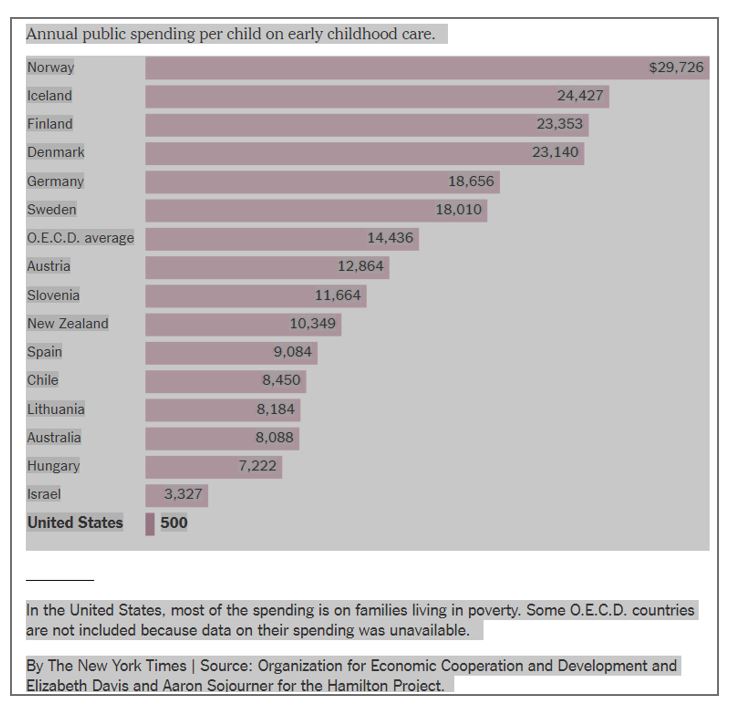
Part 4 of 5: Why Early Childhood Investment Outperforms Remedial Spending

Compared to other government expenditures, early childhood programs are uniquely cost-effective. K–12 education spends ~$15,000/student annually with diminishing returns; prison systems cost $40,000/inmate yearly with high recidivism. Meanwhile, early childhood interventions like Head Start save $4.8B–$16.1B per

Details

Part 3: Scaling the “Minnesota Model” for Maximum ROI Impact

Market-based scholarship programs like Minnesota’s Early Learning Scholarships (MELS) prove these returns are scalable. MELS provides vouchers to low-income parents, empowering them to choose high-quality programs. Result: an 18% inflation-adjusted public ROI—higher than the S&P 500’s historical average111210. The keys to replicating this success are: Targeting at-risk children: Returns exceed $17 per dollar in high-poverty neighborhoods7. Parent empowerment:…

Details