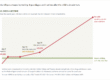
The 2025 KIDS COUNT Data Book ranked Minnesota fifth in the country for child well-being. KARE 11 covered it in June 2026 and buried the real story two paragraphs down: the state dropped from 17th to 21st in education, and the racial gaps underneath the ranking are worse than the ranking suggests.
Researchers call it the Minnesota Paradox. We rank near the top nationally on quality of life and near the bottom on racial disparity. Across education, justice, and health care, it has barely moved in a generation.
Education
Start with reading, because everything else follows from it. In 2024, 69 percent of Minnesota fourth graders were not proficient in reading and 66 percent of eighth graders were not proficient in math, a 10 point jump from before the pandemic. Alexandra Fitzsimmons of Children’s Defense Fund Minnesota gave KARE 11 the breakdown: nearly 9 out of 10 Indigenous children not proficient in reading, 83 percent of Black children, 84 percent of Hispanic children, against 62 percent of white children.

Graduation rates look better, and that is the trap. KSTP reported in April 2026 that Minnesota hit a record 84.9 percent graduation rate for the class of 2025. Break it out: 90.1 percent for Asian students, 89.9 percent for white students, 80.6 percent for students of two or more races, 76.4 percent for Black students, 72.4 percent for Hispanic students.
The Minneapolis Fed made this point years ago. African American graduation rates in Minnesota climbed from 36 percent in 2003 to 67 percent in 2018 while college readiness tests showed no progress in closing what students had actually learned. We got better at handing out diplomas. We did not get better at teaching.
Nationally, the ranking is brutal. Star Tribune Opinion reported in June 2024 that on WalletHub’s measure of educational racial equality, Minnesota came in second to last among the fifty states, behind only Wisconsin, ranking 50th in the gap between white and Black adults with at least a high school degree, 49th in the graduation rate gap, 42nd in the bachelor’s degree gap, and 38th in the test score gap.
Understand what that measures. The Minneapolis Fed found that Minnesota’s white children generally outperform their national peers while Native American children and children of color perform worse than theirs. The gap is this wide because the white baseline is so high. We built an excellent school system and did not let everyone into it.
We also push kids out of it. Native students and students of color are about one third of Minnesota’s student population and receive two thirds of all suspensions and expulsions. Black students are roughly eight times more likely and Native American students ten times more likely to be suspended or expelled than white students.
KARA’s position: A child who has been abused or neglected arrives at kindergarten with a brain that has already been rebuilt. Prolonged stress in the first years of life floods the developing brain and changes what gets built. The threat detection system grows stronger. The systems that let a child sit still, hold a two-step instruction, and recover from frustration grow weaker. Those are exactly the skills school is built on.
So the behavior and the learning problems are not two issues. They are the same injury showing up in two places. A raised voice or a crowded hallway reads as danger, the child goes into fight or flight, and from the front of the room that looks like defiance. Then we suspend him, removing him from the one predictable place in his life.
In Minnesota this lands hardest on children of color. Black children are about 2.3 times more likely than white children to be the subject of a maltreatment report and 2.9 times more likely to be placed outside the home. Native American children are removed at roughly 16 times the white rate. Black children are 26 percent of Minnesota’s foster care population and about 10 percent of its children.
This is solvable, and we know how. Home visiting nurses and trained community mentors reach the mother before the damage is done, during pregnancy and through the first two years, coaching her through feeding, sleep, discipline, and her own stress. Fewer injuries, fewer reports, a child who arrives at kindergarten regulated. Mentoring picks it up from there, giving a child one consistent adult who does not go away, which is the single condition under which a trauma-shaped brain reorganizes.
Prevention costs a fraction of removal. We are raising awareness and funding to make this happen.
Justice
That is where the pipeline starts, and the next stop is documented.
In 2022 the Star Tribune examined hundreds of juvenile court records and found Black youth in Minnesota were more than eight times likelier than white peers to be held in juvenile facilities, the 10th highest rate in the nation, despite studies showing few differences between white and Black youth in common offenses. Minnesota Reformer had flagged the same federal data in 2021, reporting Minnesota’s juvenile detention disparities among the nation’s worst, with Indigenous youth nearly 12 times more likely than white youth to be sent to detention or treatment facilities.
It has gotten worse. The 2023 federal residential placement census puts Minnesota’s Black youth placement rate at 312 per 100,000 against 32 for white youth. That is 9.8 to 1, against a national ratio of 5.6 to 1.
Nationally this is the widest Black-white gap on record since tracking began in 1997, and the reason is counterintuitive. Youth incarceration fell about 75 percent from 2000 to 2022. As the total shrank, the disparity grew. Perry Moriearty at the University of Minnesota Law School puts it plainly: the off-ramps, diversion and the rest, are far more available to white youth than to Black youth in the same circumstance. We built exits and handed out the keys unevenly.
In February 2024 the Star Tribune covered a legislative working group that found the same pattern in out-of-home placements, noting that Black and Native American youth are disproportionately sent to residential facilities, a disparity that has not changed much in 25 years.
The rewired brain of an abused child does not stop at the schoolhouse door. A nervous system built for danger reads threat everywhere, reacts before it thinks, and cannot weigh a consequence six months out against a reward available right now. In a classroom that looks like defiance. At thirteen it looks like a fight in a stairwell. At fifteen it looks like a pregnancy, a stolen car, a charge. We call these bad decisions, which assumes a decision was made. What actually happened is that the part of the brain that weighs options was the part the abuse took.
Each reaction narrows the next choice. A fight becomes a charge, a charge becomes a criminal record, a record closes off the job and the apartment. A child born to a fifteen year old who was herself abused inherits the same odds. That is how one injury becomes three generations, and it is why the child protection caseload and the juvenile detention roster are largely the same children a few years apart.
We know how to interrupt it. The Nurse-Family Partnership sends a nurse to a first-time mother during pregnancy and through the child’s second birthday. In the Elmira trial, followed fifteen years, it produced a 48 percent reduction in state-verified child abuse and neglect, 32 percent fewer subsequent pregnancies, and 61 percent fewer arrests of the mothers. The children, at age 15, had 54 percent fewer arrests and 69 percent fewer convictions than the control group.
Mentoring carries it forward. The Public/Private Ventures study of Big Brothers Big Sisters, 959 youth followed for 18 months, found mentored kids were 46 percent less likely to start using illegal drugs, 52 percent less likely to skip school, and 33 percent less likely to hit someone. For minority youth the drug effect was stronger, at 70 percent.
One nurse before the birth. One adult who does not leave, after. We spend the money after the arrest instead.
.
Child protection
Minnesota’s child protection system touches Black families constantly and protects children rarely. Those are not opposite failures. They are the same failure, measured twice.
In April 2024 the Star Tribune reported that Black children in Minnesota are twice as likely as white children to be removed from their parents, and that Native American children are 16 times more likely. That coverage accompanied a federal civil rights complaint from the Minneapolis NAACP and Children’s Rights documenting overrepresentation at every decision point. In Hennepin County, where less than a quarter of the child population was Black in 2021, roughly 40 percent of completed investigations and foster care removals involved Black children. In Ramsey County, Black children were more than half of the kids whose parents had their rights permanently terminated, more than double the national rate.
A month earlier, the Star Tribune reported legislators hearing testimony that 26 percent of children in Minnesota foster care are Black, against roughly 10 percent of the state’s child population, testimony that followed a 2023 Star Tribune investigation into system failures and drove at least nine bills at the Legislature.
The front door of that system is the schoolhouse. Mandated reporters make about 80 percent of Minnesota’s reports, and school personnel are among the heaviest reporters. A presentation to the Minnesota House cited one Minneapolis school with a 16 percent African American student population that made 145 calls to child protection, 130 of them about African American students.
Same institution as the education section. Different function.
But here is what makes this Minnesota’s particular failure, and it is the part nobody wants to hold in the same hand as the disparity numbers. All that contact does not add up to protection. Minnesota routes most reports into Family Assessment, the track with no investigation and no finding, and then routes the same families into it again and again.
Safe Passage for Children of Minnesota has been counting the results. Their study of 161 Minnesota children who died from abuse and neglect between 2014 and 2022 found repeated inappropriate assignment to Family Assessment running through case after case. In their review of 88 of those deaths, juvenile court records showed 71.6 percent of the children had a prior history with child protection. The 2016 federal Commission to Eliminate Child Abuse and Neglect Fatalities estimated that about one third of children who die of abuse or neglect nationally were known to the system. Minnesota is running at more than double that.
It is getting worse. Safe Passage’s third report, presented to the Legislature in March 2026, reviewed 44 deaths between 06/01/2023 and 12/31/2024 and found roughly a 40 percent increase in fatal child abuse over the prior period. About 63 percent were neglect cases. Roughly three quarters of the children were three or younger. One in five died of fentanyl toxicity. Domestic violence was present in about half the cases and caregiver substance use in about 40 percent. Safe Passage’s recommendation is direct: stop running repeated short family assessments on families where the risk has not gone away.
So Minnesota is doing both things at once. Investigating and removing Black and Native children at very high rates and leaving other children in homes it has already been called to three and four times. A system this busy should not be losing this many children.
Minnesota did act on the disparity side. The African American Family Preservation and Child Welfare Disproportionality Act passed in May 2024, with a phase-in beginning 01/01/2025 in Hennepin and Ramsey counties and statewide effect set for 01/01/2027. Then, as Sahan Journal reported in December 2025, a state district judge struck down the phased rollout as unconstitutional, on the grounds that the protections were not available to everyone at once.
Health care
It starts before the child is born. KARE 11 covered Minnesota’s first maternal mortality report in 2022, which found Black Minnesotans made up 13 percent of the birthing population and 23 percent of pregnancy-associated deaths, with Native American Minnesotans at 2 percent of births and 8 percent of deaths.
The state’s newest review, released in January 2026, covers 2017 to 2021 and is worse. Against a statewide maternal death rate of 17.9 per 100,000 live births, the rate for Black parents was 40.3, and the rate for American Indian parents was 217.7, more than 12 times the state rate. The report found 95 percent of these deaths were preventable.
Star Tribune Opinion flagged the pattern in June 2024, and a September 2024 Star Tribune feature on Minnesota’s Black birth centers cited the state finding that Black mothers here are twice as likely as white mothers to die from pregnancy complications.
For the babies: infant mortality for Black and Native American children in Minnesota runs more than twice the white rate, and 2025 KIDS COUNT data shows more than 11 percent of Black babies born at low birth weight against 6 percent of white babies.
When the only door open is the emergency room
A child who cannot get a therapist ends up in an emergency room, and the pattern is racial. Across a national pediatric sample of 242,036 mental health emergency visits, Black children came through at 66.1 visits per 100,000 against 41.5 for white children, a rate 1.54 times higher. Black children were also more likely to be back three or more times, 8.75 percent against 7.01 percent. This is not a sign of more illness. It is a sign of fewer front doors. One review found African American children use the emergency department for psychiatric care about 11 percent more than white children, often for conditions that were never emergencies until nobody treated them.
Then they wait. Nationally there were an estimated 5.9 million pediatric mental health emergency visits between 2018 and 2022. A quarter of them ended in admission or transfer, and of those, about a third sat in the emergency department 12 hours or longer. Waits past 24 hours were more likely for Black children. That is a child in crisis, in a hallway, on a gurney, for a day, in the loudest and brightest room in the building. Whatever brought her in, the wait makes it worse.
The cost of running a child protection failure through an emergency room instead of a clinic is enormous and nobody wants to count it. One hospital study put the financial hit of a single boarded psychiatric patient at about $2,264, combining the direct loss with the beds that could not be turned over. Multiply that across millions of visits and add the ambulance, the security staffing, the repeat visits, the school days lost, and the parent who lost a shift or a job. We could have paid for the therapist ten times.
And here is what we do not know. Minnesota does not publish suicide and self-harm figures for children in foster care, for children with open child protection cases, or for children whose cases were assigned to Family Assessment and closed. The state tracks placements, reports, and case closures. It does not track whether those children later tried to kill themselves.
Do not read that silence as reassurance. It is the opposite. These are the children carrying the heaviest trauma loads in the state, sitting in the emergency rooms described above, and we have built a system that never asks the question. A number nobody collects cannot embarrass anyone, and a harm nobody measures never has to be funded. If KARA can get one thing changed at the Legislature this session, make it this: require the state to report the metrics of suicide attempts, self-harm and emergency hospitalizations for children known to child protection, broken out by race and by case track.
The through-line
These are not three problems. A child born underweight, who arrives at kindergarten behind, who is suspended at eight times the rate of the kid next to him, who is reported to child protection by his own school, and who lands in a residential facility at 14, has passed through one system with four names on it.
Minnesota ranks fifth in the nation. Minnesota also ranks 49th in its high school graduation gap and near the bottom nationally in juvenile detention disparity. Both are true. Only one of them goes on the slide.
This is important information every State Legislator needs to know.
Send this link to them with a short note if you agree.
It only takes a minute. Find your State Representative here
Minnesota data and reports:
- Safe Passage for Children of Minnesota, child abuse fatalities report. safepassageforchildren.org/safe-passage-for-children-releases-report-on-minnesota-child-fatalities/
- Child Welfare Monitor, analysis of the Safe Passage report, 03/05/2023. childwelfaremonitor.org/2023/03/05/the-minnesota-child-maltreatment-fatalities-report-essential-reading-for-child-advocates-everywhere/
- Minnesota Department of Health, maternal mortality report 2017 to 2021, released 01/12/2026. health.mn.gov/news/pressrel/2026/maternal011226.html
- Minnesota Department of Children, Youth, and Families, African American Family Preservation and Child Welfare Disproportionality Act. dcyf.mn.gov/node/901
- Federal Reserve Bank of Minneapolis, Minnesota’s education system shows persistent opportunity gaps by race. minneapolisfed.org/article/2021/minnesotas-education-system-shows-persistent-opportunity-gaps-by-race
- Children’s Defense Fund Minnesota, 2025 KIDS COUNT release. assets.aecf.org/m/databook/2025-KCDB-newsrelease-MN.pdf
- The Imprint, civil rights complaint against Minnesota’s child welfare system. imprintnews.org/top-stories/civil-rights-minnesota-child-welfare-system/247873
Juvenile justice:
- The Sentencing Project, Black Disparities in Youth Incarceration, with the Minnesota state table. sentencingproject.org/fact-sheet/black-disparities-in-youth-incarceration/
- NPR, 04/24/2025, widest youth incarceration disparities on record, includes the Moriearty interview. npr.org/2025/04/24/nx-s1-5359110/racial-disparities-in-youth-incarceration-are-the-widest-theyve-been-in-decades
Prevention evidence:
- Nurse-Family Partnership, child abuse and neglect outcomes with the Olds citations. nursefamilypartnership.org/about/proven-results/prevent-child-abuse-neglect/
- National Institute of Justice CrimeSolutions, Nurse-Family Partnership program rating. crimesolutions.ojp.gov/ratedprograms/nurse-family-partnership
- Blueprints for Healthy Youth Development, Nurse-Family Partnership. blueprintsprograms.org/programs/35999999/nurse-family-partnership/
- Public/Private Ventures, Making a Difference: An Impact Study of Big Brothers Big Sisters. ojp.gov/ncjrs/virtual-library/abstracts/making-difference-impact-study-big-brothersbig-sisters
Emergency psychiatric care:
- Pediatric Mental Health Boarding in US Emergency Departments, 2018 to 2022. pmc.ncbi.nlm.nih.gov/articles/PMC12159435/
- Racial Disparities in Pediatric Psychiatric Emergencies: A Health Systems Approach. pmc.ncbi.nlm.nih.gov/articles/PMC10610032/