
· @Mike Tikkanen
On 03/21/2005, a 16-year-old boy on the Red Lake Reservation shot his grandfather, a tribal police sergeant, in the house they shared. Then he shot his grandfather’s companion. He put on his grandfather’s bulletproof vest, took his service weapons and his squad car, and drove to Red Lake Senior High School. There he killed an unarmed security guard, a teacher, and five students. Then he killed himself. Ten people were dead, counting him.
His name was Jeff Weiss. A lot of Minnesotans remember it. Fewer remember what came before.
That is where this post starts, but it is not what this post is about. This post is about one fact most people don’t know. In America, a child has no enforceable right to be safe from the people raising them. Whatever protection a child gets comes from child protective services, and only after someone reports, someone screens the report in, and someone acts. In rural America, where counties don’t have the tax base to pay for it, that thin protection gets thinner. On a reservation where the state can’t even see the numbers, it can disappear.
What came before
His father killed himself in 1997 after a standoff with Red Lake tribal police. Two years later his mother suffered severe brain damage in a car accident and went into a nursing home. He moved from Minneapolis to the reservation to live with his grandfather.
He posted online that he was suicidal. He asked the adults in his life for help. He wrote that his mother had told him she wished he had never been born, and that she abused him and drank heavily when he was little (Star Tribune, 03/24/2005). He was on Prozac, without the ongoing therapy that should come with it. Investigators later found that for two years he had been sending messages trying to recruit other students to help him.
How many adults saw some piece of that? A therapist. Teachers. Police. Family. Every one of them had a piece. Nobody had the whole picture, and nobody was responsible for putting it together.
I wrote in April 2005 that a functioning child protection system would at least have been looking for seriously damaged children who fit his profile. I wrote that he was not born this way. He was made this way by the adults in his life, and no one helped him. I would write the same thing today.
What came after
The school district settled with 21 families for $1 million in 2006. A mental health facility was built at Red Lake after the funerals, a nice one, about 3.5 million dollars. The cameras left. The federal investigation is still sealed.
That’s the pattern. Tragedy, outrage, a building, silence. What we almost never get is the thing that would prevent the next one: an honest public account of what was known, who knew it, and what has happened since to the children in the same situation.
Red Lake since 2021
In 2021 Red Lake took over child protection on the reservation from Beltrami and Clearwater counties. After that, the state stopped seeing Red Lake’s children the way it sees everyone else’s. In the Minnesota Department of Human Services’ own report, Red Lake chose not to report all standard child welfare data elements to the state system. The tribe sent the Legislature its own short yearly report instead.
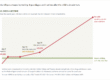
That report showed maltreatment reports falling by more than half from 2021 to 2024. Children found to be victims dropped from 142 in 2021 to 56 or 68 in 2024, depending on whether you believe the text or the chart. Did abuse at Red Lake really fall by half in three years? Nobody asked.
On 09/10/2026 the FBI and the Bureau of Indian Affairs searched the tribe’s child welfare office, and the BIA took the program over. The federal notice describes as many as eight child deaths since 2021 and says the program’s inaction contributed to as many as five. The two most recent were in July 2026. The children died of malnutrition, abuse, neglect, and drug overdoses. The notice describes an outright refusal to cooperate with federal investigators. One child was airlifted out with a skull fracture, sent back home, and airlifted out again.
The Star Tribune later reported that one child listed as dead may be alive. The Tribal Council says the notice contains mistakes and is appealing. Those questions should be answered in public, and that is the point.
Safe Passage for Children of Minnesota could not count any of these children. Cases under tribal jurisdiction are not open to the public, and Red Lake did not respond to their requests. The researchers couldn’t see these children. The Legislature was told things were getting better. And the children kept dying.
Red Lake and the rest of Minnesota
Safe Passage’s latest report found at least 44 children died from maltreatment in 20 Minnesota counties between 06/01/2023 and 12/31/2024, a 40% increase over its previous report. Half were already known to child protection. Three in four were 3 or younger. Its earlier study counted 88 deaths from 2014 to 2022. The state told the researchers the real number was 161 and refused to name the rest. Twelve to fifteen percent of the deaths it studied showed signs of torture.
Red Lake: as many as eight deaths in five years, in one small community.
Safe Passage counts only deaths that reached a court file or the news, so its count is a floor. Red Lake’s count comes from a federal notice the tribe disputes. The time periods differ. But eight children in one reservation, against 44 across twenty counties holding many times more children, should stop every one of us cold.
And deaths are the smallest number. For every child who dies, many more are beaten, starved, or raped and live with it for the rest of their lives. Nobody counts those children at all, on the reservation or off it. This Court Appointed Special Advocate argued for the removal of 50 children in his caseload over 12 years. Each child suffered egregious life changing harm.
This is third-world treatment of children in the most advanced nation in the world.
The twins case
Earlier this year the Minnesota Supreme Court decided a case about two Red Lake Nation twins. A white foster couple had cared for them for more than a year, starting when they were newborns. The tribe arranged for them to move to relatives. The couple went to court, arguing that the Indian Child Welfare Act and Minnesota’s Indian Family Preservation Act violated their right to equal protection. Their co-counsel was Mark Fiddler, a Minneapolis attorney and member of the Turtle Mountain Band of Chippewa who has spent much of his career challenging ICWA.
The court ruled the foster parents had no standing to make the argument. In October the U.S. Supreme Court declined to hear it.
Notice what the case turned on. Not what these two children need. Who has the right to ask.
I’m not arguing here about where the twins should live. The guardian ad litem reported in 2024 that they were thriving with their grandmother, and I hope that’s still true. But how would any of us know? No court, agency, or tribe is required to come back in two years, or five, and tell anyone. The placement decision gets made and the child disappears from view. That is true for Native children and for every other child in our system.
A child’s best interests should be the question every one of these decisions turns on. Too often it’s the question nobody is required to answer.
No right to be safe
In 1989 the U.S. Supreme Court decided DeShaney v. Winnebago County (489 U.S. 189). A Wisconsin county had received report after report that a little boy was being beaten by his father. It did nothing, and his father beat him into permanent brain damage. The Court ruled the county had no constitutional duty to protect him, because he was not in state custody. That is still the law. Once the state takes a child, it has to keep him safe. In his own home, nobody does.
The same year, the United Nations adopted the Convention on the Rights of the Child. Article 3 says that in every action concerning children, by courts, agencies, or legislatures, the best interests of the child shall be a primary consideration. Every UN member has ratified it except one. The United States never ratified it.
All other countries agree to report to a UN committee on how their children are doing, two years after ratifying and every five years after that. Think about that. Outside reporting on children’s outcomes, on a schedule, is the global baseline. We don’t even do it inside our own borders.
What would actually change it
None of this is new and none of it is cheap. But not cheap should be weighed against the long-term failures of 9-year 80% recidivism, the cost to the community of crime, failing schools and horrendous medical costs. Today, every piece of what we need already exists somewhere.
- Give children a legal right to safety. Minnesota can write into law what the Supreme Court wouldn’t read into the Constitution: a child has a right to be protected from serious harm by a caregiver, and an agency that ignores repeated reports can be held to account. Every child in a protection case should have their own lawyer, the way the adults do.
- Review every death and near death independently. Every child who dies or is badly hurt after being reported gets a review by someone outside the agency that handled the case, county or tribal. The review is published, with the child’s identity protected. Sealed files protect agencies, not children.
- One data standard for everyone who takes the money. Any county or tribe running child protection with state or federal dollars reports the same basic numbers: reports, screen-outs, repeat reports, removals, deaths, and near deaths. Opting out of reporting should mean opting out of the funding.
- Track child outcomes, not activity. Follow children for years after a case closes. Are they safe, in school, healthy, still in one home? Publish it every year. The arguments against this are based on confusing and conflicting privacy and security laws. We don’t need names we need metrics. Once we know how many children and families cycle through Child Protection again and again (often over decades) we can make better decisions about what needs change.
- Put a state floor under rural counties. A child’s protection shouldn’t depend on the tax base of the county they were born in. The state should pay for a minimum level of investigation, mental health care, and follow-up everywhere.
- Treat a child’s cry for help as a report. A boy posting that he wants to die is telling us. Schools need mental health screening and a path to real therapy, not just a prescription.
- Ratify the Convention on the Rights of the Child.
At Red Lake this can’t simply be imposed from St. Paul. Red Lake is a sovereign nation with good reason to distrust outsiders telling it how to raise its children. It has to be built with the Band. But sovereignty cannot be the reason nobody counts the children.
What you can do
We want transparency and we want accountability. Children deserve at least the right not to be murdered or ruined for life by the people caring for them. If our society can’t provide that, we are dismissing their civil rights, and by doing nothing we are complicit in their deaths and their harm.
Ask your state representative: how many children known to child protection died in our county last year, and where can I read the reviews? Ask whether Red Lake’s children are in the state’s numbers. Ask your members of Congress why we are the only nation that hasn’t ratified the Convention on the Rights of the Child.
All adults are the protectors of all children.
Sources
MPR News, The shooting at Red Lake: What happened (03/18/2015): https://www.mprnews.org/story/2015/03/18/red-lake-shooting-explained
MPR News, Red Lake shooting: Feeling scars 10 years later, part 2 (03/18/2015): https://archive.mpr.org/stories/2015/03/18/red-lake-shooting-feeling-scars-10-years-later-part-2
MPR News, Red Lake families reach settlement in 2005 shooting (10/07/2008): https://www.mprnews.org/2008/10/07/red_lake/?refid=0
Officer.com, Red Lake Indian Reservation event: https://www.officer.com/training-careers/article/12301219/red-lake-indian-reservation-event
KARA, A Normal Kid (04/26/2005): https://invisiblechildren.org/2005/04/26/a-normal-kid/
KARA, Committed To Children’s Issues – Aitkin DFL (08/16/2013): https://invisiblechildren.org/2013/08/16/committed-to-childrens-issues-aitkin-dfl/
KARA, Child Homicides and A Week After Redlake (01/22/2020): https://invisiblechildren.org/2020/01/22/week-after-redlake/
KARA, Sometimes People Get Shot (05/04/2026): https://invisiblechildren.org/2026/05/04/mass-shootings-2026-child-abuse-trauma/
ICT News, Minnesota Supreme Court ruling on Red Lake twins: https://ictnews.org/?p=326319
Minnesota Reformer, Supreme Court denies latest challenge to Indian Child Welfare Act (10/06/2026): https://minnesotareformer.com/2026/10/06/supreme-court-denies-latest-challenge-to-indian-child-welfare-act/
Sahan Journal, interview with Mark Fiddler: https://sahanjournal.com/news-partners/indian-child-welfare-act-minnesota-attorney-mark-fiddler/
Human Rights Watch, US: Club of 1 on Children’s Rights (10/01/2015): https://www.hrw.org/news/2015/10/01/dispatches-us-club-1-childrens-rights
MPR News, Feds say takeover of Red Lake child welfare program was due to pattern of inaction (10/14/2026): https://www.mprnews.org/story/2026/10/14/feds-say-takeover-of-red-lake-child-welfare-program-was-due-to-pattern-of-inaction
MPR News, Red Lake chair agrees to step down (10/16/2026): https://mprnews.org/story/2026/10/16/red-lake-nation-chairman-darrell-seki-to-resign-after-child-welfare-program-probe
WCCO via Valley News Live, Series of deaths connected to Red Lake Nation child welfare program (10/15/2026): https://www.valleynewslive.com/2026/10/15/series-deaths-connected-red-lake-nation-child-welfare-program-leads-federal-takeover/
Star Tribune, Feds took over Red Lake Nation’s child welfare program after series of deaths (10/13/2026): https://www.startribune.com/feds-took-over-red-lake-nations-child-welfare-program-after-series-of-deaths/601900782
Minnesota Department of Human Services, child maltreatment report to the Legislature (Red Lake data note): https://www.lrl.mn.gov/docs/2026/mandated/261220.pdf
CASA Minnesota, Safe Passage report, Minnesota Child Fatalities from Maltreatment 2023-2024 (01/09/2026): https://casamn.org/2026/01/08/new-report-examines-minnesota-child-fatalities-from-maltreatment/
Star Tribune, Readers Write letter from Safe Passage’s executive director (10/25/2026): https://www.startribune.com/readers-write-child-welfare-republican-candidates-renewables-senate-race-muslim-brotherhood/601904389
KARA, Why Minnesota’s Family Preservation Laws Are Costing Children Their Lives (10/19/2026), including the Cohen and Riley op-ed on Red Lake’s legislative reports: https://invisiblechildren.org/2026/10/19/minnesota-family-preservation-laws-child-deaths/
DeShaney v. Winnebago County Department of Social Services, 489 U.S. 189 (1989)