Nov 7, 2026 · @Mike Tikkanen
Last month a child psychiatrist named Jonathan Slater wrote in the New York Times that screens are not the problem behind our children’s mental health crisis. The letters poured in. Some agreed with him. Some said he had it backwards. One reader described parents on the subway staring at their phones while their babies begged to be looked at.
Not every child with a phone gets swallowed by it. Most kids can put it down, mostly, most of the time. Some can’t. And when you look at who can’t, you find the same children who show up in every other bad outcome we track. They are the kids who were hurt early, at home, by the people who were supposed to keep them safe. “I’ve seen where this ends up. As a CASA Guardian ad Litem, I had a six-month-old girl on my caseload whose lower body was badly burned. The person caring for her that day was a six-year-old relative, because her mother was consumed by drugs and social media. Two escapes, one baby.”

The research on this is now strong enough that we should stop arguing about screen time as if every child were the same child. It isn’t about the device. It’s about what the child is using the device to get away from.
What childhood adversity does to a life
In 1998, researchers at Kaiser Permanente and the Centers for Disease Control and Prevention published what became known as the Adverse Childhood Experiences study, or ACE study. They asked more than 9,000 adults about hard things that happened to them before age 18. Physical, sexual and emotional abuse. Watching their mother being hurt. Living with someone who drank or used drugs, was mentally ill, or went to prison. Later versions added neglect and losing a parent to divorce or separation.
Each kind of hardship counts as one point. Then they looked at how those adults were doing.
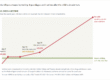
The results changed how we understand childhood. Adults with four or more ACEs had four to twelve times the risk of alcoholism, drug abuse, depression and suicide attempts compared to adults with none. The more hardship in childhood, the worse the outcomes, step by step.
Those aren’t random outcomes. They are ways of coping with severe child abuse and neglect.
A child who is hit, or ignored, or terrified at home doesn’t get to work through it. There’s no one to work through it with. The fear and shame get carried forward. By the teenage years, many of these kids have found something that makes the feeling stop for a while. Alcohol does that. Drugs do that. So does anything that pulls you out of your own head and keeps you there.
This isn’t rare. When the CDC surveyed adults in 25 states, about 61 percent reported at least one ACE, and nearly 1 in 6 reported four or more. If the same holds for kids today, a classroom of 30 holds about five children with the kind of load that the research ties to a lifetime of trouble.
We have known this for almost thirty years. Some prevention and treatment programs are built around it, though never enough of them. What we haven’t done is follow the same logic to the newest way a hurting child can make the feeling stop.
Researchers now find the same pattern with screens
Over the last few years, researchers have started asking whether compulsive screen use follows the same path as drinking and drugs. The answer keeps coming back yes.
A 2024 review pulled together 37 studies from 12 countries, covering more than 45,000 people from age 8 to 67. Every type of childhood adversity they looked at was linked to internet addiction. Abuse, neglect, household dysfunction, all of it. The link was strongest in younger people.
A 2025 review in the Journal of Behavioral Addictions found the same thing for phones. Children who had been maltreated were more likely to use their smartphones compulsively. The authors concluded that these children need special attention to their phone use, and help with both the harm of the abuse and the habit that grew out of it.
A 2023 study of American early adolescents found that ACEs were tied to more problematic gaming and phone use, even after accounting for other factors.
Put those together and the picture is hard to miss. The children most likely to lose control of a screen come from the same group the ACE study flagged for alcohol, drugs and depression. It’s the same wound, reaching for a different bandage.
I want to be careful here, because this subject attracts a lot of overstatement. These studies show a link, not a sentence. Most children who were hurt don’t become addicted to their phones, and plenty of kids who are glued to a screen had good, safe childhoods. The link is real but it’s not destiny, and the size of it varies from study to study.
What the research does tell us is where to look. When a child truly can’t put the phone down, and it’s crowding out sleep, school, friends and family, that child’s history matters. The phone may be the symptom we can see. The cause may be one we can’t.
Why a screen works for a hurting child
Think about what a phone offers a child whose home is chaos.
It’s always there. It doesn’t yell. It doesn’t drink. It doesn’t leave for three days and come back without explaining. It never hits. It answers every touch, right away, every time. In a house where nothing is predictable, the screen is the most predictable thing in the child’s life.
It also lets the child disappear. A game, a feed, a stream of videos can fill every corner of the mind so there’s no room left for fear or loneliness. Adults who drink to forget understand exactly what that is. We just don’t usually see it in a ten-year-old.
And it’s free, it’s legal, it’s in every pocket, and no adult is going to take it away the way they’d take a bottle. For a child, that makes it the easiest escape there is.
Then add the design. These apps are built by some of the best-paid engineers in the world to keep people scrolling. Most of us feel that pull and still manage to put the phone down. A child who has nothing waiting for them when they look up has much less reason to.
This is why I don’t think the screen time debate gets anywhere when it treats every child alike. Taking the phone away from a kid who uses it to hide from a dangerous home doesn’t fix the home. It takes away the only hiding place they had. It may even make things worse, if nothing safer takes its place.
Seeing the child behind the phone
None of this goes away at 18. The 2024 review included adults up to age 67, not just kids. The ACE study was about adults from the start. The coping a child learns at ten is often the coping an adult reaches for at thirty-five.
That brings me back to the parents on the subway, staring at their phones while their babies ask to be seen. I don’t know anything about those particular parents. But I know that some adults who can’t look up from a screen were once children who learned that a screen was safer than a person. And a baby who isn’t looked at is a baby collecting hardship of their own. That’s how this moves from one generation to the next.
So here is what I’d ask you to take from this.
When you see a child who can’t put the phone down, don’t stop at how many hours. Ask what they might be getting away from. A teacher, a coach, a neighbor or a grandparent who asks that question, and means it, may be the first adult who has.
When you hear the screen time debate, notice who it leaves out. Parents arguing about limits for kids with stable homes are having a reasonable conversation. It’s just not the conversation about the kids I worry about.
And when you hear that screens are the cause of everything, or the cause of nothing, remember that both can be partly true. For most kids, a phone is a phone. For a hurt kid, it can be the only place that feels safe. The screen isn’t the wound. For a lot of children, it’s the bandage they found on their own.
Check out KARA’s Book Project
KARA’s Friday Morning Newsletter Signup
SOURCES:
- Jonathan Slater, “I’m a Child Psychiatrist. Screens Are Not the Problem,” New York Times, Oct. 13, 2026, and the letters to the editor that followed.
- Felitti VJ et al., “Relationship of Childhood Abuse and Household Dysfunction to Many of the Leading Causes of Death in Adults: The Adverse Childhood Experiences (ACE) Study,” American Journal of Preventive Medicine, 1998;14(4):245-258.
- CDC Vital Signs, “Adverse Childhood Experiences: Preventing Early Trauma to Improve Adult Health,” 11/05/2019: cdc.gov/vitalsigns/aces
- Hao F et al., “The association between childhood adverse experiences and internet addiction: A meta-analysis,” Acta Psychologica, 2024.
- Ye Y et al., “Childhood maltreatment and problematic smartphone use: A multilevel, meta-analytic review,” Journal of Behavioral Addictions, 2025;14(2):644-659.
- “Associations between adverse childhood experiences and early adolescent problematic screen use in the United States,” 2023.
KIDS AT RISK ACTION/KARA INVISIBLE CHILDREN This post submitted by KARA board member Mike Tikkanen